
How to Get More Involved in
Public Decision-Making
“The price of apathy towards public affairs is to be ruled by evil men.”
— Plato
Ignore Politics and Government at Your Own Peril
Many people feel helpless when it comes to impacting our political system. They don't know where to start, doubt if they can actually help make a difference, or if they can do so while still living their everyday lives. For these and other reasons, people often shy away from actively participating in our democracy, even in small ways.
Like the Plato quotation above, an idea attributed to Eighteenth Century British philosopher Edmund Burke addresses the need for citizens to engage with the political system: “The only thing necessary for the triumph of evil is for good men [and women] to do nothing.” In other words, if we don’t pay attention to politics and government in this country, we—and future generations—are likely to continue suffering the same negative consequences that make life difficult for so many Americans today.
That’s why this topic and many other pieces on GeorgeWasRight are dedicated to identifying specific ways for people to become more engaged in the political process. You can help make a difference, especially if you choose your spots and actions carefully, and if you have realistic goals about what you wish to accomplish. Perhaps don’t begin your journey into American politics by running for President, but take on smaller, more manageable tasks. The good news is that, just by reading the information here on GWR, you’re already taking steps in that direction.
Beyond just informing yourself about issues and current events, about the structure of our government and the ways in which it works, and about candidates and officeholders, there are several small but important ways in which you can influence the political process. Let’s take a look at some of them.

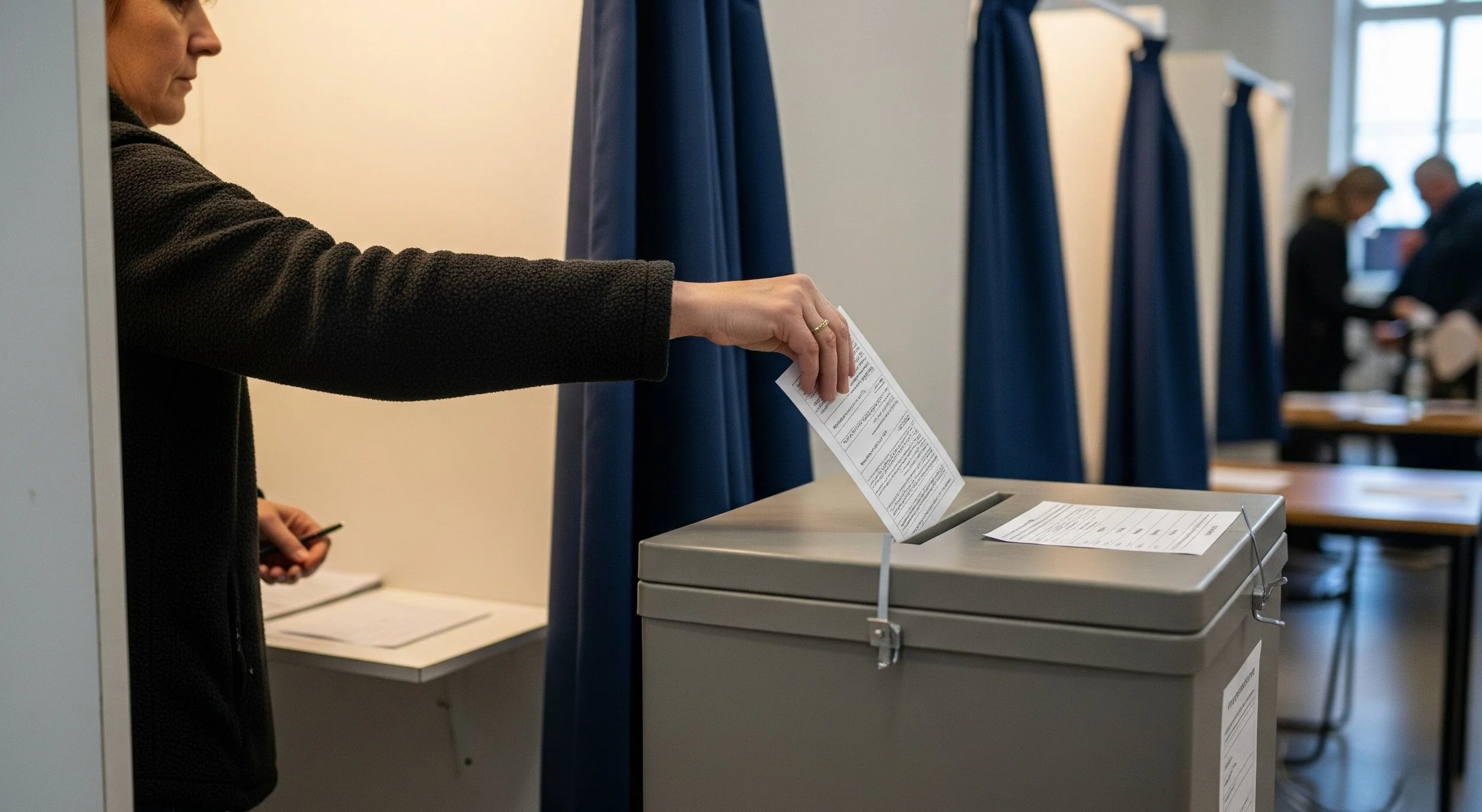
Start By Voting—And By Voting Smartly
Voting is the only way many citizens participate in public decision-making. Unfortunately, many people—though thankfully not most—don't even bother to do that. Some aren’t registered to vote. Some aren’t interested in politics, or don’t feel that their vote will make a difference. Still others don’t know about the candidates, or don’t like them. But many politicians rely on this voter disengagement and disaffection to retain power, and to act contrary to the public interest, instead serving themselves and special interests.
That’s why it’s so important to vote on a regular basis. To make the most of our votes, we need to make more considered decisions. Do some research on the candidates, including looking into what incumbents on the ballot have done during their time in office. One of the most important things you’ll find on GeorgeWasRight is how to see what groups or industries are the biggest contributors to candidates and ballot measures. Both the Primer on Money in Politics and Revealing Open Secrets pieces on GWR will be helpful in this regard.
Make candidates earn your vote! Do not simply vote for somebody because they belong to a particular political party. Party-line voting simply encourages the same behavior from politicians. It is a major driver of partisan infighting and the gridlock that prevents the compromises necessary to get anything done in Washington and our State capitols.
Contact Your Representatives
In this era of the Internet and other electronic communications, it is easy to identify and contact your elected representatives. Links provided in this section will help you quickly learn who your Federal and State representatives are. If you contact the office of one your elected officials to provide your thoughts on a particular issue, their office staff will take note of your views. Phone calls usually carry more weight with lawmakers than e-mails, but all communications matter.
At the website of the U.S. House of Representatives, you can learn the name of your House Member simply by entering your zip code in the search box at the top right corner of the window. Depending on the District in which you live, you may have to enter your address in order to determine your Representative. Once you have brought up the page for your House Member, you can click on the e-mail icon to contact them that way. You can also find telephone numbers to call their office.
On the Contacting U.S. Senators page at the website of the U.S. Senate, simply select your State from the dropdown menu. Your two Senators will be identified, along with links to contact them. The telephone numbers of their offices are also listed.
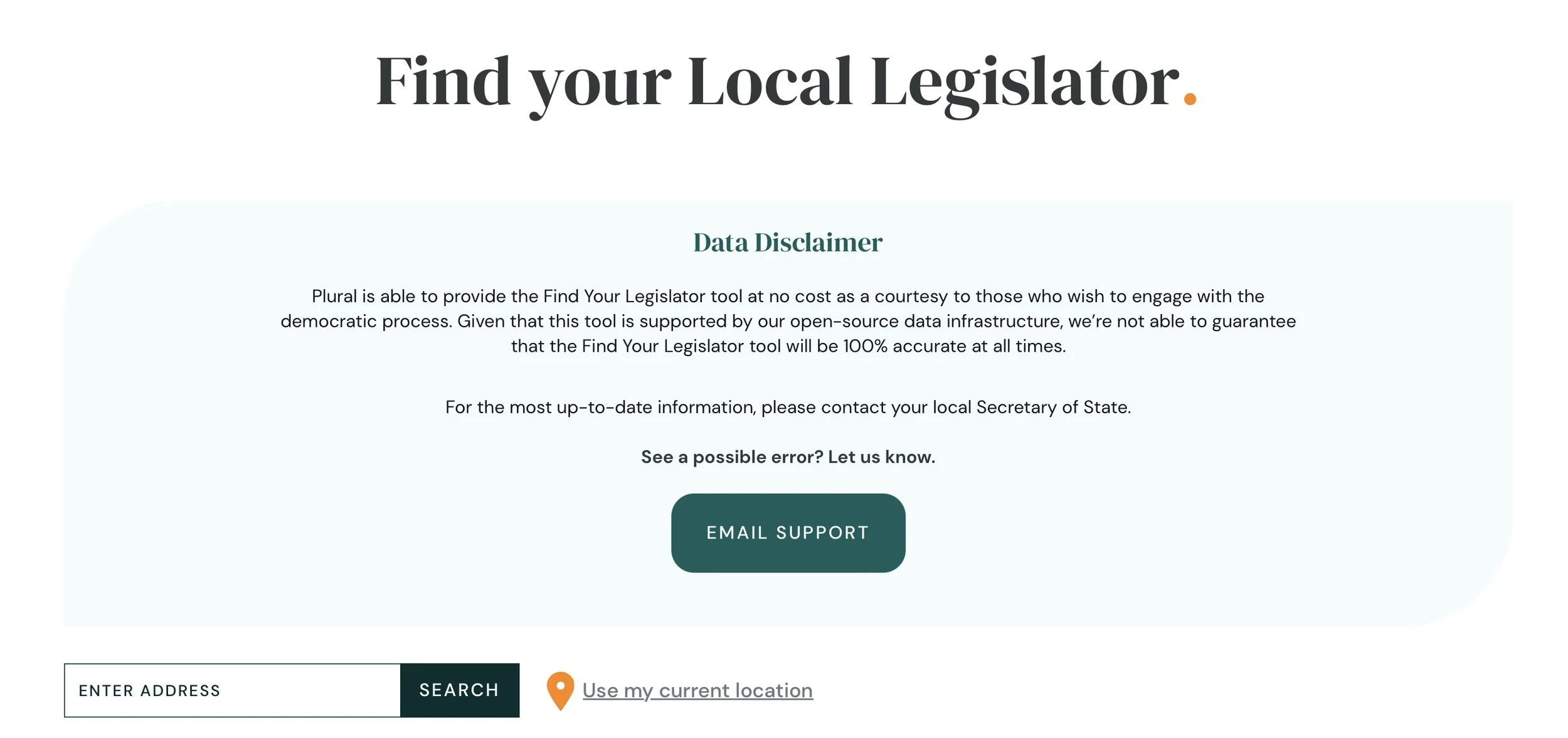
The website Plural will allow you to easily find out your State Legislators by entering your address, or by using your current location. Once the list appears, you can click on the individual lawmakers, which will bring up a page that includes a link to e-mail them, along with the telephone number of their office. You’ll also find a list of bills they’ve sponsored.
Tips for Communicating with Lawmakers
The government websites of many legislators accept e-mail only from people who live in their District. If you get screened out in this way, but still want to reach a specific lawmaker, try calling their office or sending a paper letter via the Post Office. Never mail anything to officeholders other than a letter.
Most Congressional and State legislators have one office in the Capitol (either in Washington, D.C. or in their State capital), and one in their District. If you want to communicate about legislation or other policy issues, contacting their Capitol or State capital office is usually the way to go. For all other business, contacting their District office is your best bet.
Some lawmakers aren’t superstars when it comes to drafting legislation. Even so, many run great “service stations” for dealing with issues their constituents encounter with government agencies. Staffs in District offices are usually very helpful at resolving bottlenecks and other such problems. That’s a primary reason that they’re there, so don’t hesitate to contact them if you need some assistance, or even if you just have a question.
Did You Know…?
Which of the following statements did at least one of the Founding Fathers believe?
A) Public trust shouldn't be for personal advancement, but a duty to serve the nation.
B) Political leaders should avoid partisanship and act with humility, in the best interests of the nation.
C) Politicians should not cling to power for personal gain, and holding office should not be for self-interest.
D) The only foundation for a republic is public virtue that is rooted in private virtue.
You can find the correct answer at the bottom of this page.

Work with Online Groups
When engaging in public decision-making, it can be both useful and satisfying to connect with like-minded people. It’s easy to do this online. Whatever your issues or political leanings, there are likely many others who share your views.
Despite their well-deserved reputation as vehicles for mass disinformation, social networks have made it easier for people to associate and organize. With the speed and reach of today’s online tools, it’s not difficult to find others with whom you can build momentum for change.
Reach Out to News Organizations
Regardless of your opinion of them, many news organizations still have a significant reach within their communities. Because of this, they can be useful tools to get the word out and influence political change. Here are some tips for communicating with journalists.
Be Calm in Your Communications
Journalists are regularly inundated with angry calls, e-mails, and online comments about the stories they produce. To increase your chances of hearing back from them, be calm and respectful in your communications.
Contact the Right Person
Instead of e-mailing or otherwise reaching out to multiple people in a news organization, it’s usually better to establish a good relationship with a single individual. Rather than trying to communicate with the head of a news organization, or with one of its editors, it's usually best for your initial point of contact to be the journalist who reported the story.
The Inside the Newsroom piece on GWR describes the operations and structural hierarchies of television and newspaper news-gathering organizations.
Do Some Writing Yourself
There are several ways of making your opinions known to journalists, and through them, to the community where you live. Most news organizations allow readers to post online comments about their stories. Some moderate comments by requiring people to register before posting, or by deleting comments that violate their publishing standards (which typically include prohibitions against profanity and calls to violence).
Many newspapers still publish Letters to the Editor, sent to them either through their online portal or via postal mail. As old-fashioned as this is, it is still a good way to share your thoughts with the community.
Longer-Form Writing
While news organizations state their opinions through editorials, most also publish opposing points of view, called Op-Eds. Many are written by syndicated columnists whose work is carried by many different news organizations, but space is sometimes reserved for longer pieces from people in their community. You can also make your voice heard by writing your own blog, creating your own podcast, or by appearing on others’ online platforms.


Attend a Public Meeting
While you can become more engaged in public decision-making from the comfort of your sofa, there are other actions you can take that will require more effort and time. One is to attend a public meeting (though some public meetings can also be attended virtually, via the Internet). This is probably most effective at the level of County or City government, the local school board, or commission meetings.
You can also attend public meetings held by Federal, State, or Local officials. Keep in mind that such meetings can often be acrimonious affairs, with differing and often opposing views expressed with considerable passion by both officials and their constituents. Always keep your cool. When possible, one-on-one interactions with lawmakers or staff are likely to be more pleasant and more productive
Many public meetings of governmental bodies have a time set aside for public comment. If you do speak, do so calmly, and get right to your points.

Take Part in Demonstrations and Protests
There are numerous reasons to demonstrate or protest. You might support or oppose a particular piece of legislation that may be, or has been, enacted. You might be for or against actions taken—or not taken—by a governmental body. You might want to show your support or opposition to a lawmaker, or to a candidate for public office.
And just as there are different reasons to demonstrate or protest, there are different ways of doing so. In fact, everything discussed to this point could be considered forms of support or dissent. But you can also register your objection to Laws and policies by taking other actions. For example, if you discover that a company is supporting governmental action or inaction that you oppose, you can use the power of the purse (or wallet) and refuse to spend any money with that company.
Perhaps the most notable and longstanding form of protest is simply to take to the streets in an organized movement—a right guaranteed by the First Amendment to the Constitution. When crowds of citizens assemble to object to a policy or action, it can have an impact on Lawmakers. Of course, from the standpoint of both effectiveness and morality, protests should be peaceful and completely free from violence and destruction of property.

Work on a Political Campaign
Whether it be for or against a candidate or ballot measure, political campaigns usually welcome more volunteers. In order to ensure the visibility to the public of politicians and issues, a great deal of work must be done. Volunteers are often called upon to make telephone calls, walk neighborhoods, collect signatures, register voters, and perform other duties intended to win people to their candidate or cause, and to encourage voter turnout.
Working on a political campaign can be very satisfying. Taking an active part in furthering the best interests of your Local community, your State, or the nation can prove meaningful and effective. In the company of like-minded individuals, it can foster a sense of camaraderie, and a feeling of contributing to something greater than yourself. There’s also a certain buzz of fellowship, and of working toward a common cause, that can be worthwhile and even fun.
At times, political campaigns also have paid positions they need to fill. These are far fewer in number than volunteer posts, and they tend to be at the upper echelons of the hierarchy. If you’re interested in doing this sort of work professionally, then volunteering is a good way to get your foot in the door. You never know what can happen after a successful campaign.

Contribute to a Political Campaign
Other posts on GeorgeWasRight discuss the impacts of money in politics. In A Primer on Money in Politics and Soft Corruption, we see how special interests can have outsized impacts on both candidates and lawmakers. Revealing Open Secrets shows how to identify what and how much donors are contributing to individual candidates and ballot measures.
But we are also entering a new era in politics. By virtue of the Internet, candidates who want to bypass special interests—and in that way not be beholden to them—can do so by financing their campaigns via many small contributions from individual donors. Several politicians have already done this, thus proving that it is possible.
This is a significant development that hasn’t really received the attention it deserves. It is important because it opens up our political process to more candidates. It also frees lawmakers from having to cater to the special interests that funded them, instead allowing them to work for the best interests of their actual constituents. By making even a small donation to a campaign, not only will you benefit the particular candidate or ballot measure, but you will also be adding your voice to the chorus demanding an important change to the way we run our elections.

Serve on a Public Authority, Board, Commission, or Committee
Most County, City, and other Local governments have authorities, boards, commissions, or committees established for various needs. These bodies perform civil functions such as city planning, police oversight, usage of parks and recreational spaces, and budgeting and policymaking for schools.
Most such entities meet only monthly or quarterly. They typically offer little, if any, financial compensation. Still, serving on one of these bodies can be a great way to get involved in government without demanding a huge time commitment. (As volunteer bodies go, planning commissions tend to be somewhat more contentious and time-consuming.)
To find a list of vacancies in your area, simply navigate to your County, City, or Local government website. There will be links to the various government bodies needing additional members, and how to apply for such positions.

Run for Public Office
Of course, the most impactful way to become more involved in public decision-making is to run for office. This is something that many haven’t the time or inclination to do. Still others interested in serving their fellow citizens might be deterred by our toxic political environment, or even simply by the daunting task of having to raise large sums of money in order even to be competitive.
But if we want something better than government of, by, and for special interests, we need more candidates committed not to the needs of their own political career, but to public service. As we’ve seen, many Local governments staff offices—such as a Town Council or County Board of Supervisors—on a part-time basis, with little or no pay. Seeking one of these positions, or even volunteering for a Local authority, board, commission, or committee, is a great way to see if working in government is for you.
Additionally, Federal and State lawmakers have both staff positions and internship programs. For these types of jobs, it is best to contact individual officeholders directly for opportunities in their offices or legislative bodies.
To run for public office, there are filing requirements for Federal and State candidates. Some of these filings pertain to getting your name on the ballot, while others regard the acceptance of campaign contributions. The Federal Election Commission (FEC) regulates the requirements for running for Federal offices, such as the U.S. Senate and the U.S. House of Representatives.
Should you be interested in running for an office closer to home, there are numerous State and Local agencies to consider. State election offices can help determine the specific procedures and deadlines for elective offices in your area. Some States have multiple sites for candidates, one for the office of their Secretary of State, where you would file your candidacy papers, and another for where you would file mandatory contribution reports. If you want to run for a Local office, such as a seat on the City Council or County Board of Supervisors, contact the County Clerk or Registrar of Voters in your area (some areas employ other titles).
If you do decide to run for office, make sure that you are aware and meet all filing requirements and reporting deadlines. Hiring a professional campaign treasurer will help you sleep better and avoid legal quagmires.
Pollster Tip for Potential Younger or First-Time Candidates
Because so many voters are frustrated with the status quo—career politicians servicing their special-interest contributors, but not the people they represent—this is a great time for new candidates to throw their hats into the ring. Given the current political environment, and if you take your campaign seriously and work hard at it, your chances of success might be better than you think.
This may sound simplistic and an unnecessary piece of advice, but make sure that you have comfortable walking shoes. To give yourself the best opportunity to succeed, you should log a lot of miles standing and walking. Meeting voters in person, at campaign events or in their homes, can be quite persuasive, as many candidates don’t bother to do so.
Summing It Up
Whether or not significant political change occurs will depend on if enough of us are willing to make the rather modest efforts necessary to make it happen. There are so many ways you can get more involved in public decision-making. You’ve already made a good start of it by reading GeorgeWasRight. Now you can do more by taking some of the suggestions detailed in this post. Some require only a small amount of time and effort, while others, such as running for office, will require a greater commitment. But no matter the size of your contribution, we need you to participate in our democracy.
This might sound like something your parents would say, but they're right: You can make a difference!
Answer to the Did You Know…? Question
The answer is All of the Above.
A) Thomas Jefferson (the author of the Declaration of Independence, the nation’s first Secretary of State and its third President) believed that public trust shouldn't be for personal advancement, but a duty to serve the nation. In a remark to Baron Humboldt, Jefferson once said, “When a man assumes a public trust, he should consider himself as public property.” (Quoted in Life of Thomas Jefferson (1834), by B.L. Rayner, page 356.)
B) George Washington (Commander of the Continental Army, the nation’s first President, and the inspiration for this website) believed political leaders should avoid partisanship and act with humility, in the best interests of the nation. In his Farewell Address to the nation in 1796, Washington wrote, ““However [political parties] may now and then answer popular ends, they are likely in the course of time and things to become potent engines by which cunning, ambitious, and unprincipled men will be enabled to subvert the power of the people, and to usurp for themselves the reins of government, destroying afterwards the very engines which have lifted them to unjust dominion.”
C) Alexander Hamilton (author of a majority of the Federalist Papers, and the nation’s first Secretary of the Treasury) believed that politicians should not cling to power for personal gain, and holding office should not be for self-interest. In Federalist Paper #72, Hamilton wrote, “An ambitious man, too, when he found himself seated on the summit of his country's honors, when he looked forward to the time at which he must descend from the exalted eminence for ever, and reflected that no exertion of merit on his part could save him from the unwelcome reverse; such a man, in such a situation, would be much more violently tempted to embrace a favorable conjuncture for attempting the prolongation of his power, at every personal hazard, than if he had the probability of answering the same end by doing his duty.”
D) John Adams (the nation’s first Vice-President and its second President) believed that the only foundation for a republic is public virtue that is rooted in private virtue. In a letter to Mercy Otis Warren in 1776, Adams wrote, “Public Virtue cannot exist in a Nation without private, and public Virtue is the only foundation of Republics.”