About the Founder of
GeorgeWasRight
“I skate to where the puck is going to be, not where it has been.”
— Wayne Gretzky
“No one’s interested in the anecdotal story of your life.”
My name is R. H. Hertz, and I received the tough but sage writing advice above early on from an editor/mentor/friend. Believing this to be true, I’ll be more of a narrator here than a participant. I’ll chime in when my experience working in and around politics as a legislative staffer, public-opinion pollster, and educator may prove informative.
For more than forty years, I’ve been conducting public-opinion polls for news organizations, government bodies, non-governmental organizations (NGOs), and an eclectic mix of businesses and entities in other fields. I’ve also spent more than 30 years teaching American politics and research methods to college students.
Pollsters design questions to make respondents comfortable in expressing their opinions, regardless of how those opinions may sound to others. Like others in the trade, I’m often asked how I can objectively analyze peoples’ views without injecting my own. It’s actually easy. Public-opinion pollsters have only one asset: our reputation. If our poll results have a consistent lean in one direction, our credibility is compromised. A good pollster asks questions, but does not answer them.
While polling offers a good big-picture perspective on what the public thinks, teaching courses on American politics and government helps illuminate the views of mostly younger people. However, there are serious challenges facing pollsters today; first and foremost, it has become exceedingly difficult to collect a large enough random sample from which to draw meaningful results. On this site, I will among other things pull back the curtain from public-opinion polling, show how it’s done, and reveal how and why it can easily go so offtrack.
My professional experience in other areas of politics and government, as well as in other fields, may also be helpful here. Since GeorgeWasRight will spend a lot of time examining the influence of money in politics, my experience working in California for the state agency that regulates campaign contributions and lobbying may provide some insight. I have also partnered with news organizations to make this vital data more transparent to the public.
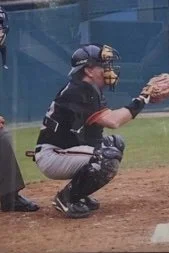
The baseball references you’ll occasionally find are the result of a break I took from politics. A planned one-year timeout from politics turned into a thirteen-season stint working with Major League Baseball players and coaches on predictive statistics for in-game use.
At the big-league level (I strictly played amateur ball), the incredible speed and movement of pitches requires hitters to guess pitch type and/or location. Using game data, my job was to make players better guessers. On the offensive side, that meant making hitters better able to predict the next pitch they would see, and on the defensive side, it meant making pitchers aware of patterns in their throwing so that they could avoid becoming more predictable.
Unfortunately, in today’s MLB, analytics have gone wild, often without the needed balance from the lifetimes of experience offered by those who have played, managed, or coached in the game. In both the fields of politics and baseball, there are some who try to do things with statistics that can't be reliably predicted, often due to the use of small sample sizes.
I will gladly share what I’ve learned in both fields to make GeorgeWasRight a useful and positive experience for anyone who wants to learn more about the workings of American politics and government, and especially for those looking to become more engaged and participatory in our democracy.