
Inside the Newsroom
“If we amplify everything, we hear nothing.”
— Jon Stewart
News is Everywhere
For some, a televised high-speed car chase is the news. Particularly for those living in large cities, the sight of police pursuing criminals racing recklessly along the streets appears regularly on their TVs, computers, and cell phones, all of it relentlessly tracked and caught on camera by reporters following along in helicopters. It may be thrilling, and it may be dangerous, but it’s also a simple story. By contrast, reporting news about politics and government is considerably more complicated.
In this time of great societal division, regardless of their political viewpoints, most Americans believe that the news media is biased. (Check out Don’t You Think the News Media is Biased? for more on this.) The era when the country all looked to trusted sources ended long ago. Back in March 1981, the revered television news anchor, Walter Cronkite—often cited as The most trusted man in America—endured forced retirement, and public faith in the news media immediately began to flag. As evidence of Cronkite’s stellar reputation, his skeptical coverage of the Vietnam War helped shift public opinion and consequently sped the U.S. withdrawal from that conflict.
Today, many more news sources vie for our attention, but they appeal to much narrower audiences. Many of us follow news only from sources who we perceive agree with our own perspectives. But anybody with an online presence can create what they call a news website, and it can be difficult to distinguish such sites from those run by professional journalists. Consequently, people often cannot even agree on a set of actual facts, which in turn makes it almost impossible to achieve consensus on how to resolve or even meaningfully discuss the serious problems facing our nation.
Internet-Based News
The largest growth sector in the news biz has been in Internet-based news organizations, often referred to as new media. They range from one-person shops to good-sized, well-funded entities. Many operate as nonprofits, supported by philanthropists and foundations. They also rely on contributions from users, and they work hard to keep their expenses down. Some have the resources to offer new content on a daily basis, while others focus on less-frequent but more in-depth investigative stories.
One of the most prominent new-media, nonprofit news organizations is Propublica.org, whose reporting has broken many big stories with extensive, data-driven reporting. Another online nonprofit news website, CalMatters.org, does a fine job of comprehensive reporting on California politics and government. Overall, new media are a breath of fresh air in an industry that needs it.

Having conducted polls and other election projects over a forty-plus-year career, for dozens of news organizations with widely varying editorial points of view, I’m pretty familiar with their structure and how they operate. I’ll explain how they are typically organized, how professional reporters and editors go about their work, and how they utilize multiple levels of editing and other practices designed to filter out errors and potential biases. Let’s pull back the curtain and take a look!
Newspapers
Since 2005, more than 3,000 newspapers have ceased operations in the U.S. From one perspective, this seems understandable, given their anachronistic feel: daily or weekly hard copies of black ink on pulpy, low-grade paper, distributed manually, all in an online world where almost all adult Americans own a cell phone. But newspapers have historically served a vital role in disseminating information across the country, and the loss of so many has created news deserts, areas in which people have little or no access to local news. Because papers still exist, and because of their traditional importance, let’s take a look at how they operate.

Three Sides of Newspapers: News, Editorial, and Business
Most news-gathering organizations of any kind are divided into two essential parts: news and business, with the news further sectioned into a news side and an editorial side. The Publisher of a newspaper runs the entire operation. They typically focus on the business side of the ledger, which includes advertising sales, marketing, and circulation, though they often play other roles as well, such as serving on the paper’s Editorial Board.
A newsroom is just what it sounds like: the area where news stories are written and edited. As mentioned above, newsroom staff are generally cleaved into two groups: news and editorial. The individual in charge of the news side typically has one of several titles: Editor in Chief, Executive Editor, or sometimes just Editor. They report to the Publisher, and they oversee the people who produce the paper’s content, which includes other editors, reporters, and support staff.
Since the Editor in Chief has a great deal of responsibility and a very full plate, their deputy, usually called the Managing Editor, runs the day-to-day newsroom operations. Still, when important or difficult decisions need to be made, the Big Kahuna—the Editor in Chief—makes the final call. Depending on the newspaper’s size, it may also employ a Deputy Managing Editor, Assistant Managing Editors, section editors, copy editors, and more. Though running a prospective story by several editors can be time consuming, the multiple layers reduce errors and strengthen stories.
The City Editor, also sometimes called the Metro Editor, is responsible for local news, a critical part of most papers with significant circulation. In old black-and-white movies, breathless reporters raced to telephones, where they asked to speak with the City Desk so that they could orally deliver breaking news stories. For realistic portrayals of newsroom life and the characters who make them run, the films The Paper (1994) and All the President’s Men (1976) both hit the mark.
Reporters are generally split into two groups. Reporters in one set regularly cover specific beats, such as local news, government, features, sports, and so on. The other group comprises general-assignment reporters who take on whatever stories they need to, but that aren’t on a beat that’s already covered. General-assignment reporters have one of the toughest jobs in the newsroom, often having to familiarize themselves with new issues and sources. Such tasks normally fall to the shortest-tenured, least-experienced reporters.
Editorial writers produce pieces that reflect the newspaper’s opinions. Papers also publish pieces from those with opposing points of views (known as Op-Eds, for Opposing Editorials), as well as Letters to the Editor from members of the community. The Publisher often heads the paper’s Editorial Board, which interviews and endorses candidates for public office, and takes stands on local and national issues. Some Editorial Boards also include members of the public to incorporate broader perspectives.
The recommendations of newspaper Editorial Boards once held great influence with voters. In exit polls of people who had just voted in person, you could see many clutching cutouts of those recommendations. Though their influence has waned in today’s more competitive and polarized news marketplace, newspaper endorsements can still be helpful in a tight race.
Did You Know…?
Since so many people now vote prior to election day, either in person or by mail, exit polls used by news organizations, both to help make election outcome projections and to reveal the reasons people voted the way they did, are now often supplanted with phone and/or online interviews conducted prior to election day.
Separating News and Editorial Content
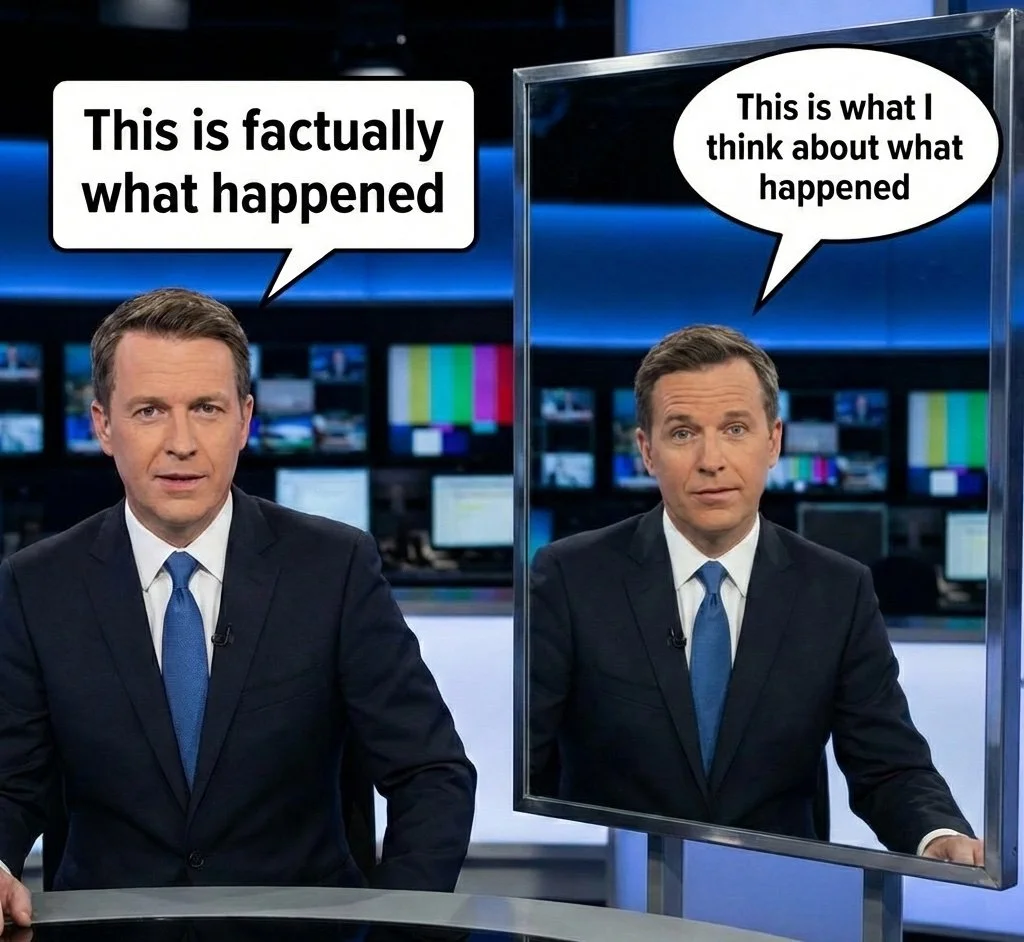
One reason so many people feel that news coverage is biased comes from their failure to distinguish between news and editorial content, despite organizations’ extensive efforts to separate the two. At most papers, news and editorial staff are divided in several ways. They can work on the news side or on the editorial side, but not on both at the same time. Editorial writers are also usually separated physically from news reporters, with the two groups occupying different floors, or at least different sections, of the newsroom.
News and editorial content are also partitioned in their presentation to the public. While most newspaper space—called the news hole—is dedicated to news and feature reporting, editorial content has its own page or pages, and in larger papers, a separate section. Do such measures work? To many outside of the newsroom, probably not, which may help explain why many feel that all news coverage is biased.
Most local television stations no longer run editorials. Station General Managers, the TV news equivalent of newspaper Publishers, used to read editorials on-air at the end of local news broadcasts, but most stations stopped the practice long ago. I’m not entirely sure why, but since many General Managers come from business and their editorial perspectives largely reflect that, the topics they would discuss may not have been of keen interest or importance to many viewers.
Local TV News
The boss in local television newsrooms is almost always called the News Director. They have a tremendous amount of duties in their position, and many sport a perpetually harried look. A bank of TVs usually sits on the wall opposite the News Director’s desk. Visitors can get the impression that they’re not being paid attention to, but the TV’s are usually just background noise, left on mostly to show what events and stories the station’s competitors are reporting.
Besides managing the newsroom staff, News Directors and their deputies, usually called Managing Editors, are responsible for the final decisions on the selection of stories and how they’re presented. Managing Editors also play a key role in juggling the station’s resources, such as broadcast trucks, and in ensuring remote news crews remain safe. Stories shot remotely have become increasingly dangerous, with some members of the public actually attacking news crews. Many stations now include security personnel on remote assignments. I’ll always remember a car ride I took in 1991 with the publisher and editors of the San Diego Union-Tribune, during the opening days of the first Iraq war. Their deep concern for the safety of their reporters on the ground was very moving.
Local TV news operations used to have smaller staffs than their print counterparts, but that gap has probably closed as staffing cuts in recent years have hit newspapers especially hard. While there have also been substantial budget cuts and consolidations in local television news, it is not as apparent to the public because the number and length of TV newscasts has remained steady, while newspaper print editions are clearly smaller than in years past.
TV newsrooms are usually livelier than their print counterparts. There are people constantly hustling around the room, and a public-address system continually barking out information, all producing a buzzy vibe. Full news broadcasts are shot on a set, and robotic cameras are now the norm. Flash-cam video spots to promote upcoming stories are frequently shot in the newsroom.
I’ve been fortunate to have the opportunity to work with open-minded News Directors and newspaper Managing Editors. Many have been willing to take chances on new ideas and fresh ways of polling, in projects geared toward making it easier for voters and candidates to connect with each other. Though I’ve worked with many local TV stations, I’m not shy about criticizing some of their practices. One such area is their scant coverage of State politics, especially considering how much money they make selling airtime for campaign ads. But some local TV news executives are stuck in an older paradigm characterized by the attitude that, “Politics equals no eyeballs.” But that’s not the world we live in today, where interest and participation in politics and elections are at elevated levels. Ratings are a function of relevance, and the sooner more local TV stations take a greater interest in these things, the more relevant they’ll become, particularly to younger generations who will increasingly drive our political conversation.
There has also been substantial consolidation in the ownership and operations of local television stations. This Stanford University report discusses these changes, and how they can impact the quality and direction of the local news many residents receive in their communities.

How News Actually Becomes News
To be completely frank, the process for how news makes it into a paper or onto a television broadcast is kind of boring—unless going to twice-daily meetings is your idea of a good time. Many key reporting decisions—like story selection and play—are made at these daily morning and late-afternoon meetings.
In some ways, such meetings are holdovers from the pre-Internet era, back when newspapers had deadlines to hit in order for stories to make it into the next day’s edition. But they’re still useful in a 24/7 news environment, even though breaking news stories run pretty much whenever they’re ready. News meetings at newspapers are usually led by the Editor in Chief or the Managing Editor. Other attendees include the City Editor, various section editors, and reporters working on stories that are ready or almost ready to go.
At newspapers, reporters and editors are looking to get their stories on the front page, or better yet, above the fold in print editions. In TV news, they contend for play on their most popular broadcasts, and prominence on their online platforms. News meetings offer a way to collaborate and plan coverage in thoughtful ways. Many are conducted with a high degree of irreverence, which helps take the edge off disagreements.
Summing It Up
I hope you enjoyed our newsroom tour, and perhaps even picked up a thing or two. What you think might be an interesting and exciting field to work in—journalism—actually is. However, it requires doing difficult, often complicated work, with a high degree of professionalism and the ability to withstand considerable scrutiny and critical suggestions.
Reporters and editors need thick skins to survive, particularly at a time when so many question their impartiality. And in an era of large-scale cutbacks and consolidations, they must make do with diminishing resources and the loss of many colleagues. In my experience, most are dedicated professionals who get their jobs done, regardless of the circumstances with which they and their news organizations must contend.
Especially in era where special-interest groups virtually own many lawmakers, aggressive but fair reporting is all that stands between us and those public officials concerned more with their own interests than those of the public.