Don’t You Think the
News Media is Biased?
“All I know is just what I read in the papers, and that’s an alibi for my ignorance.”
― Will Rogers
We Can All Agree on One Thing
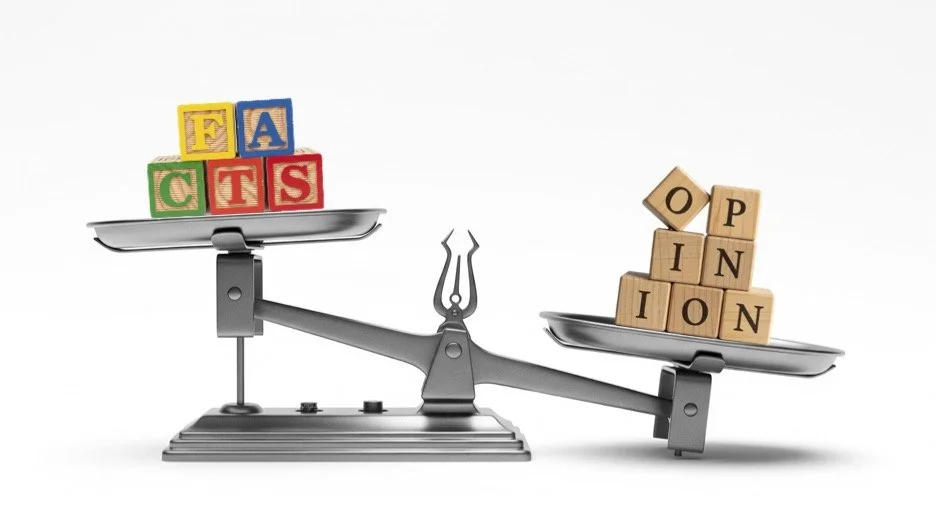
Despite the deep political divisions currently fracturing this country, there is one opinion shared by virtually all Americans, regardless of their partisan stripe: the news media is biased.
More than three-quarters of respondents to this poll felt that way. A majority of that size tells us the opinion crosses all political and demographic lines.
For many years, I’ve conducted polls and other election projects for dozens of news organizations with vastly different editorial points of view. Have I ever been asked, or even received subtle hints, to shade a poll's results to fit a particular editorial viewpoint, or to reinforce some other agenda? You might be surprised to hear that the answer is an unequivocal no.
The widespread perception of bias may stem in part from people assuming that all or most news organizations are biased and actively push a specific perspective. Indeed, in this Internet age, it can be difficult to distinguish between news operations that conduct themselves with high journalistic standards, and those that function as advocacy groups for political viewpoints. In addition, there’s a great deal of disinformation out there that’s spread by various groups, including foreign entities.
What’s worse, it’s not always easy to discern what’s real and what isn’t, what’s true and what’s a lie. In many instances, blatant fabrications are dressed up to sound reasonable and convincing. And with the advent of Artificial Intelligence (also known as AI), audio, images, and video can be manufactured to provide “evidence” for even the most outrageous falsehoods.
News Media Ownership Changes and Media Consolidation
There’s plenty wrong with the news biz today, but the problems are more subtle than simple bias, and often more difficult to see. For example, many newspapers used to be owned by generations of families who viewed them as community assets, and they were willing to accept relatively modest profits. Today, newspapers are increasingly owned by hedge funds or other financial entities more interested in maximizing their return on investment than anything else; honest, ethical journalism and serving the community are not even considerations. Many follow the same basic script to maximize their profits: sell the paper’s newsroom and other real-estate holdings, make major cuts in staff and content, and extract large payouts for the new owners.
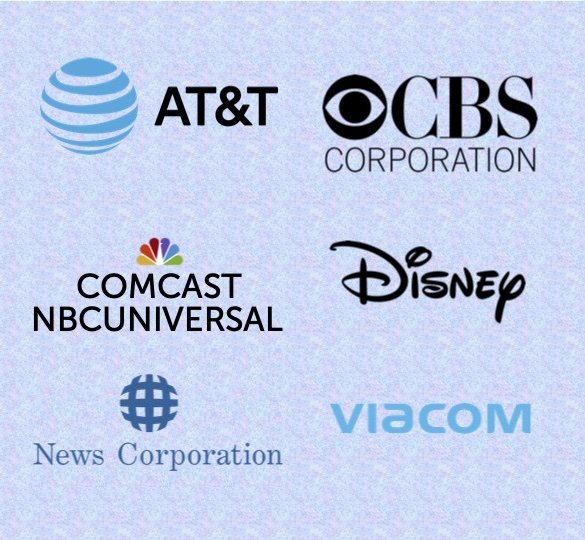
Consolidation in the ownership of newspaper and television stations began decades ago, but the 2008 recession drove it to new levels. In 1983, 50 companies controlled 90% of all media outlets in America. By 2011, that number had shrunk to just six.
The 2008 recession caused advertising revenues to dry up in a big way. They’re also more spread out across different types of media, particularly online. Many legacy news organizations instituted large budget cuts, which began a downward spiral in the amount and quality of content they could afford to produce.
Thousands of newspapers have folded over the past 20 years, and many more will likely follow. This has already resulted in an increase in the number of news deserts in the country—communities with little or no significant local news coverage.
Local television stations have also taken big hits in ad revenue, leading to considerable cuts in their budgets. These cutbacks are less obvious since the number of newscasts has remained about the same, but they have limited resources and breadth of coverage. One means of bringing in revenue, and yet another dent in the armor of journalistic integrity, is for local broadcasts to allow advertising disguised as news.
Local TV news is also getting a lot less local. Large holding companies today own dozens, and in some cases, more than a hundred stations. Some of these companies want to convert their stations into national networks, which would further erode local content.
Why Having Strong News Organizations Matters, Especially Today
The loss of so many newspapers, along with content reductions across all local news media, may not seem like a big deal, but it matters. In fact, it matters a lot. Without vigorous reporting, misdeeds by corrupt politicians, special interests, and other political power players won’t be made known to the public. Think about how safe you’d feel about driving with no police on the roads.
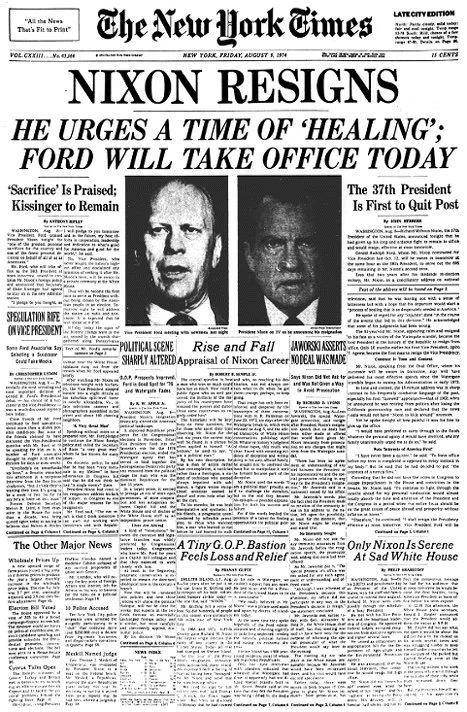
Absent the persistent digging by Washington Post reporters Bob Woodward and Carl Bernstein, the 1972 break-in at the Watergate Hotel might have been written off as a third-rate burglary. Instead, the efforts of Woodward and Bernstein uncovered the identities of those who approved the crime, which in turn led to the revelation of criminal acts by, and ultimately the resignation of, President Richard Nixon.
Unearthing such behavior is what news organizations do. In 2010, the Los Angeles Times broke a huge scandal about city officials looting the small city of Bell, California by taking outrageous salaries and other forms of illegal payments and benefits. The public learned of this because of extensive reporting, which led to significant consequences for the perpetrators.
Freedom of the press is a major part of our First Amendment guarantees. Journalists function as a public check not only on the government, but also on others who take advantage of consumers, harm the environment, and do other things that impact the quality of our lives. In my experience, the vast majority of professional journalists are dedicated to their craft, and to serving the public interest. Robust reporting is an integral element of a functioning democracy. Knowing that their actions will be scrutinized and reported can have significant deterrent value on those in power, both in government and outside it.
Did You Know…?
What is the Hostile Media Effect?
A) News reporting that, in addition to facts, includes numerous opinions
B) The perception that journalists are biased
C) Opinion pieces that masquerade as factual
D) The tendency of people to spot bias in news items that favor viewpoints that oppose their own
You can find the correct answer at the bottom of this page.
Accurately Reporting the News Isn't Easy
Professional journalism requires numerous levels of safeguards to avoid or limit errors. Are such systems infallible? Of course not. People make mistakes, and the investigative nature of journalism often makes separating fact from fiction difficult. It requires finding multiple reliable sources, sifting through often conflicting accounts, and other time-consuming practices.
Additionally, the 24/7, print-it, put-it-on-the-air, get-it-posted nature of news today injects greater speed into the process, creating another cause for potential errors. Most professional journalists would never knowingly get a story wrong, though many citizens don’t see it that way. Some of this public disdain may be part of a broader decline that Americans have in institutions.
Also, many people lack any personal experience in dealing with journalists. As a teacher, one way I address such perceptions is by bringing reporters and news editors into the classroom. Giving students the opportunity to interface with working journalists provides a more realistic picture of how they work, and why they do what they do.
Journalists must develop the capacity to observe and report, without emotion or opinion, on often distressing events. Covering natural disasters, violent crime, and other heartbreaking stories are simply a part of daily newsroom life. Putting aside their personal views and feelings must become habits for journalists, both to do their jobs in a professional manner, and to safeguard themselves on an emotional level. As a result, humor among journalists can be on the dark side, but it is a necessary coping mechanism.
How Journalists Work
Some people believe that journalists simply make up the news, or that they report what they do in order to settle scores. In my professional experience with hundreds of journalists, I can tell you that’s just not the way they work.
Most news organizations have multiple editors, as well as other, often redundant checks to improve accuracy, provide quality control, and avoid errors. Television news stories are usually developed by reporters under the supervision of a producer. The talking heads you see on TV range from newsreaders—people whose job is limited to delivering the news—to reporters who do their own research and editing. The process of researching and verifying the details of a story requires endless telephone calls, e-mails, texts, and interviews. Reporters must continually dig for facts and question what they discover in order to figure out who’s being truthful and who’s not, who’s interested in the public good or protecting their own interests, who’s trying to do the right thing or has an axe to grind. Whether in print or on the air, news stories pass through many hands and are seen by many eyes before they’re published or broadcast. The multiple layers of editors and producers help filter out even unwitting bias. But no system is perfect, particularly after endless rounds of budget cuts. And journalists, like everyone else, occasionally make mistakes.
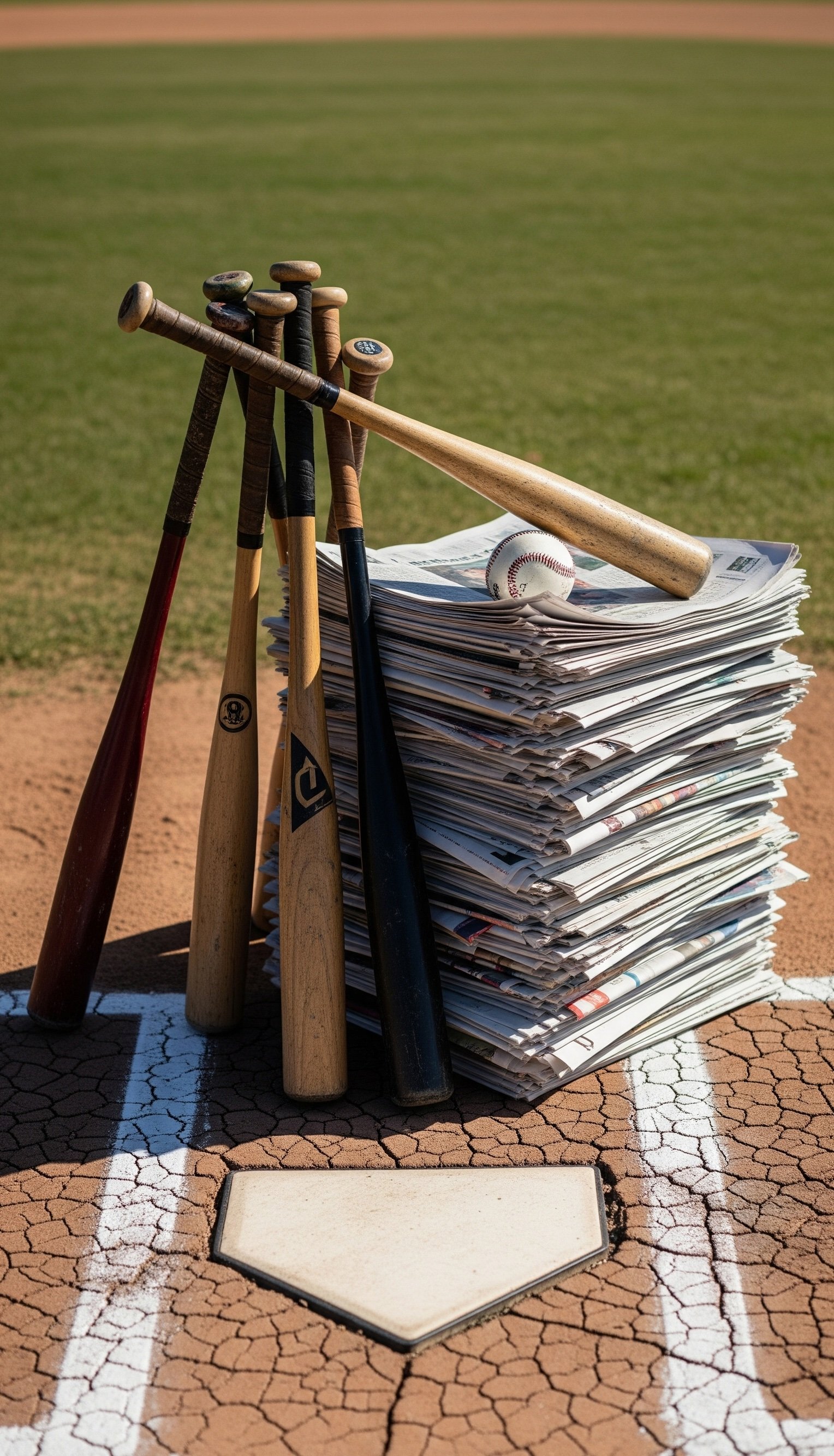
There is also little doubt that, with the proliferation of the Internet, the need for speed and massive budget cuts have increased the error rate. Interestingly, our performance expectations for professional athletes are considerably lower. A Major League player who bats .300—that is, gets a hit three times out of ten—can land a multimillion-dollar contract, while a single, honest error can ruin a journalist's career.
Summing It Up
People don’t follow news about government and politics for various reasons. Some avoid it because they don’t know much about either government or politics. Others are put off by the nastiness of the debate. Still others believe that all news reporting is biased.
In the college classes I teach, I often assign a semester-long project where students must log news stories. To put it mildly, many students aren’t initially wild about it. Ironically, this oft-dreaded task is the one I hear the most good things about from former students.
Once, after ordering food on a drive-through line at a fast-food restaurant, I reached the window to discover that the cashier had taken a class from me. She offered the following appraisal, which has stuck with me:
“Hey, Professor, loved your class, I’m still following the news. You want ketchup with your fries?”
Those fries tasted pretty sweet.
Due to the seriousness of the problems we face, we’re living in a time where people need to be better informed and more involved in public decision-making. If we want politicians to pay more attention to vital issues many of them would just as soon ignore, then regardless of how you feel about the media, it is important to follow the news regularly.
Answer to the Did You Know…? Question
The answer is D) The tendency of people to spot bias in news items that favor viewpoints opposed to their own.
In 1985, three researchers conducted a pioneering study demonstrating that individuals are more likely to characterize news coverage as biased when it favors the views of a political party adversarial to their own. You can read about the Hostile Media Effect in this piece, which also discusses the original research. That research has been independently verified multiple times.