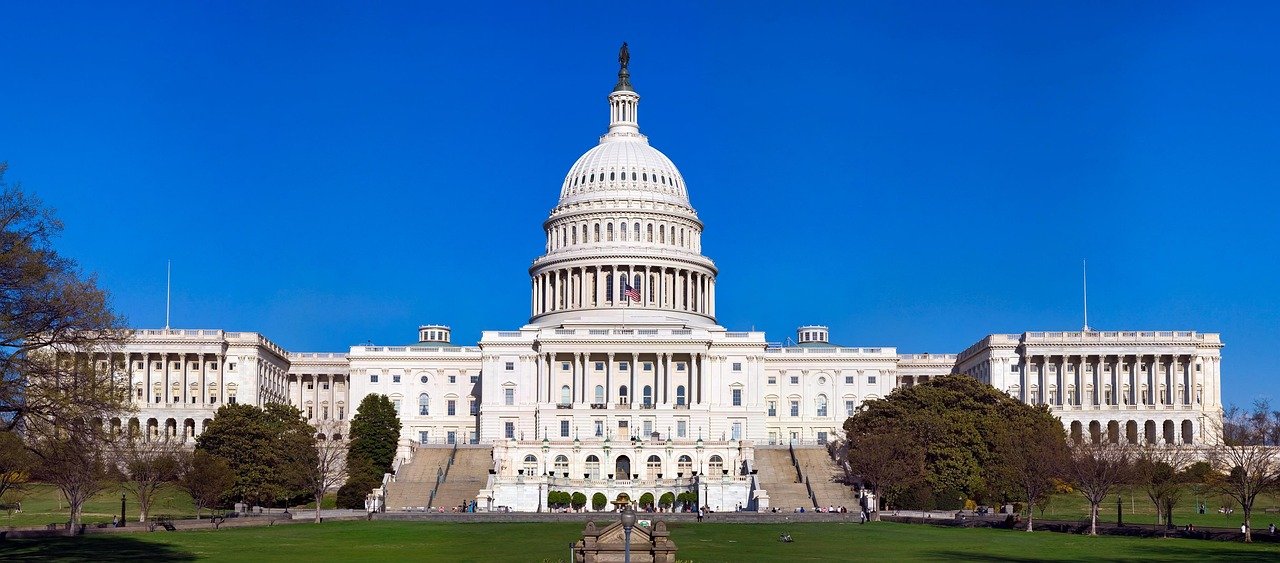
Legislative Branch
“In politics we presume that everyone who knows how to get votes knows how to administer a city or a state. When we are ill…we do not ask for the handsomest physician, or the most eloquent one.”
— Plato
Overview
As discussed in Three Branches of Government, the fundamental responsibility of the Legislative Branch is to make Federal Laws. It consists of the Congress, which in turn comprises the House of Representatives and the Senate. Their powers are defined under Article I of the U.S. Constitution. The fundamental job of Congress is to pass laws.
The House has 435 full voting members, who each serve two-year terms. The number from each state is based on population, with each state having at least one Representative in the House. When a state has only one representative, they serve at large for the whole state. In states with more than one Representative, each serves a unique geographical district.
There are also six non-voting members in the House, usually called Delegates. They represent the District of Columbia, along with the U.S. Territories of American Samoa, Guam, the Northern Mariana Islands, Puerto Rico, and the U.S. Virgin islands. Puerto Rico is represented by a Commissioner. Non-voting Representatives can serve on and fully participate in House committees, introduce legislation, offer amendments, and introduce bills or resolutions in the House, but they cannot vote on the final version of that legislation.
The Senate has 100 members, two from each State, no matter its population. Senators are elected to six-year terms, which are staggered, so that a third of the Senate is up for election every two years. As of 2026, there are no limits to the number of terms Members of Congress may serve, as long as they get reelected. Many States and localities have term limits for their non-Federal representatives.
The House and Senate operate quite differently. In the House, a simple majority (218) can do pretty much whatever they like. However, to fully control the Senate, the majority needs 60 of the 100 seats to overcome the filibuster, a legislative tactic used to extend debate without a vote, which gives the minority greater power than in the House. Such a vote to cut off debate and end a filibuster is called cloture.
Did You Know…?
How many States have only a single Representative in the House?
A) None
B) 1
C) 3
D) 6
You can find the correct answer at the bottom of this page.
Why the difference in term lengths? The Framers of the Constitution wanted the House of Representatives to be closely connected to the people and responsive to their daily needs, and they saw shorter terms as a means of achieving that goal. By giving Senators longer terms, the Framers envisioned the Senate as a place for more reasoned debate, more removed from the emotions of the day.
Concerns today about the Senate revolve around their inability to get much done. The objections of even a single Senator can slow or halt its business. Additionally, dealings between the House and Senate are common, even between members of the same party. In order for a bill to become a law (which you can read about in How a Bill Becomes a Law), it must be approved in both chambers of Congress, but bills they pass in either the House or the Senate often fail to pass in the other.
Primary Responsibilities
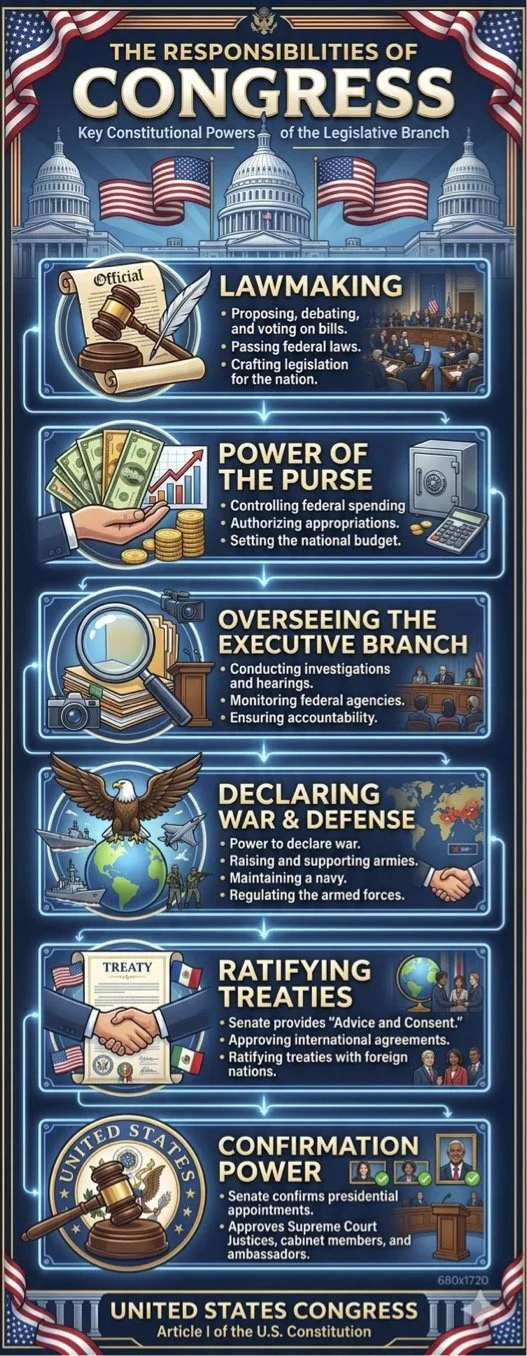
Article I of the Constitution specifies the duties of the Legislative Branch.
Drafting and passing Federal laws
Funding the government
Conducting oversight of both the Executive and Judicial Branches
Declaring war and providing for national defense
Ratifying treaties and other international agreements
Making recommendations for Federal appointments
Confirming Presidential nominations for heads of Federal agencies, Federal judgeships, and other key positions (Senate only)
Leadership in the House of Representatives
The most powerful Representative in the lower chamber is called the Speaker of the House. The Speaker is elected to that position by the entire House. In practice, this means that the Speaker is a member of the party that holds the majority in that chamber. They function as the presiding officer administrative head of the House. After the Vice-President, the Speaker is second in line in the order of succession to the Presidency.
The party who holds the most seats in the House is represented during debate by the Majority Leader, elected by the membership of that party. Similarly, the party with fewer sears chooses its own head, the Minority Leader.
Both parties also elect among their number somebody to serve as their Whip (called, not surprisingly, the Majority Whip and the Minority Whip). Among the most important duties of these individuals is to survey their party membership to gauge support for a particular bill, which in turn helps party leadership decide whether to advance, delay, or alter proposed legislation. Whips are also responsible for communicating with their party membership, persuading them when necessary, and mobilizing them to ensure that they are on the House floor for votes.
Parties also choose their own Conference or Caucus Chair. They typically run periodic meetings to discuss policy and strategy. They also coordinate messaging to the public for their party in the House, and organize internal elections to choose party leadership and committee assignments. House Chairs must also build consensus among their party on legislative goals and major votes.
This House web page describes these and other leadership positions, and also identifies which Representatives currently hold them.
Leadership in the Senate
As in the House, the two parties elect their chamber heads, known the Senate Majority Leader and the Senate Minority Leader. Holding the most power and influence in that chamber, the Majority Leader controls the legislative agenda, manages the floor schedule, manage the floor schedule, and holds the right of first recognition to speak on the floor. The Minority Leader acts as the chief spokesperson for their party, and works with their counterpart on scheduling.
As in the House, the two parties elect their chamber heads, known the Senate Majority Leader and the Senate Minority Leader. Holding the most power and influence in that chamber, the Majority Leader controls the legislative agenda, manages the floor schedule, manage the floor schedule, and holds the right of first recognition to speak on the floor. The Minority Leader acts as the chief spokesperson for their party, and works with their counterpart on scheduling.
The Constitution also provides for two other positions: the President of the Senate and the President Pro Tempore of the Senate. The Vice-President fills the first role, in theory presiding over the Senate, maintaining order, and casting a tie-breaking vote when the chamber is deadlocked. In practice, the President Pro Tempore performs all but the last of these functions; they are elected by the entire Senate. By tradition, the position goes to the most senior member of the majority party .
Just as in the House, the majority party elects a Majority Whip, and the minority party, a Minority Whip. The parties also select their own Conference or Caucus Chair.
This Senate web page describes these and other leadership positions, and also identifies which Senators currently hold them.
Congressional Committees
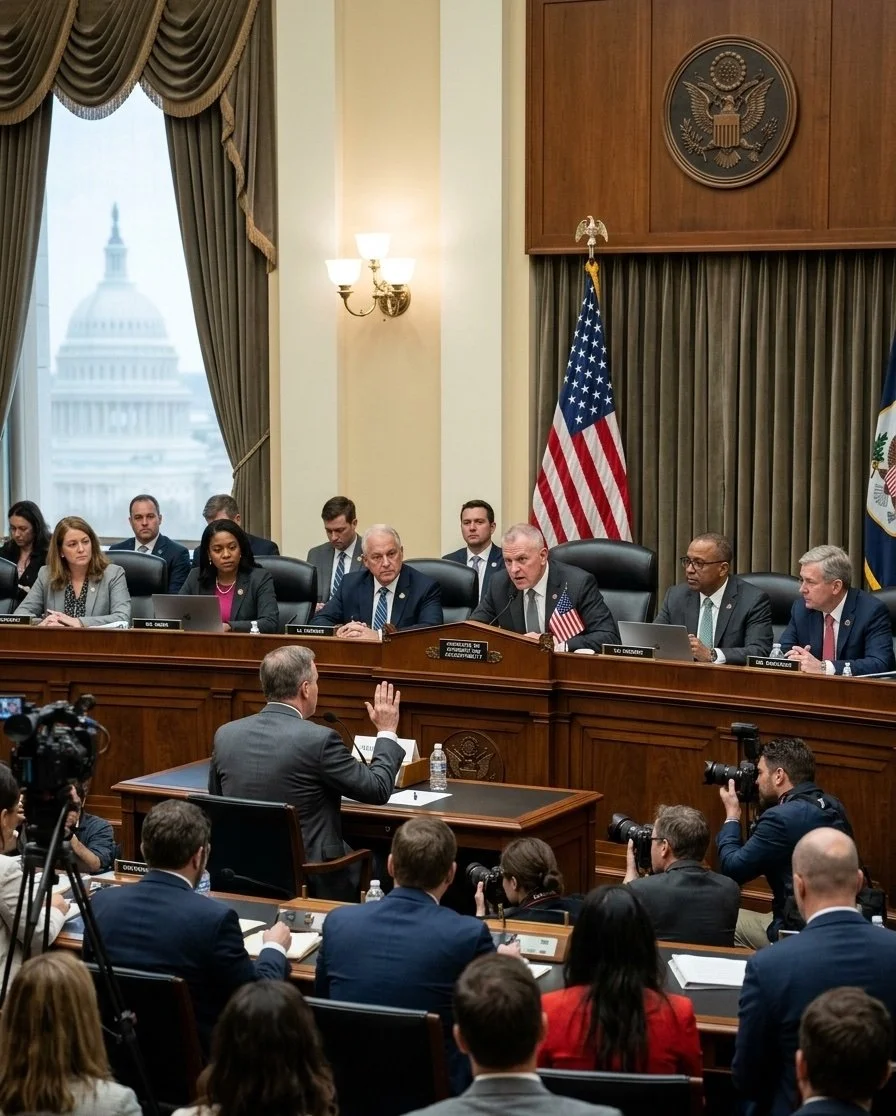
In both Chambers of Congress, Committees form the primary functional working units. Committees are groups of legislators, with members of both parties (though with more members from the party in the majority). They charged with handling specific legislative duties, investigations, and oversight. Once elected to Congress, Members are usually assigned to three to five different Committees.
The head of each Committee is called a Chair, and they are a member of the majority party. Their powers include setting the agenda; scheduling hearings; leading debates and amendments on bills, and managing votes on whether to send a bill to the full Chamber; establishing and oversee Subcommittees; and controlling budget and administration.
Committee Chairs used to be appointed on the basis of seniority (the length a legislator has served on a Committee, not their age). In recent years, though, both Chambers have shifted toward becoming more top-down, with the Speaker of the House and the Senate Majority Leader exerting more influence in the selection of Committee Chairs and other leaders. As a practical matter, this has tended to increase legislators voting with their party, at the expense of them considering the relative merits and drawbacks of individual issues.
Types of Committees
Standing Committees: These permanent Committees have been established by Chamber rules to deal with significant areas of policy. One example is the House Committee on Ways and Means, which is the oldest Committee in Congress. It is tasked with handling with taxation, tariffs, and debt management; social programs, such as Social Security, Medicare, and unemployment benefits; and trade policy. Another example is the Senate Judiciary Committee, which conducts background investigations and holds hearings for Federal judicial nominees, including for the Supreme Court; reviews and votes on officials nominated to serve in the Department of Justice, including the Attorney General and the Director of the FBI; performs oversight; and drafts and reviews proposed laws regarding Constitutional Amendments, civil liberties, immigration, antitrust enforcement, intellectual property, and criminal justice.
Select (or Special) Committees: These can be either temporary or permanent, and are created for specific, focused investigations or tasks. In the House, one example would be the Committee on Assassinations, which served from 1976 to 1979, and which investigated the assassinations of President John F. Kennedy in 1963, and of civil rights leader Martin Luther King Jr. in 1968. In the Senate, an example would be the Committee to Study Governmental Operations with Respect to Intelligence Activities, which served from 1975-1976, and which investigated alleged systemic illegalities, overreach, and constitutional abuses by Federal intelligence agencies.
Joint Committees: These temporary Committees include members from both the House and the Senate to oversee Congressional administrative functions or conduct studies.
Conference Committees: These temporary Committees include Members of both Chambers, and are empaneled specifically for the purpose of resolving differences between House and Senate versions of a single bill.
“Juice” Committees
Though not mentioned in the Constitution, “Juice” Committees handle key government functions like Appropriations, Armed Services, and Budget. The nickname comes not from those critical operations, but because membership on them is highly prized and pursued. Why do Members of Congress seek to be on such Committees? Because they are exceptionally good vehicles from which to fundraise. An example in the House is the Subcommittee on Government Operations, empaneled under the Committee on Oversight and Government Reform. That committee, and others like it in State Legislatures, is highly sought after because they regulate gambling interests, who are often large campaign contributors in most States.
Significant Problems
One could write a book, and some authors have, about all that ails Congress. Here are brief summaries of just a few of the major problems.
Partisan Divisions: While party divides have been around since the founding of our nation, their intensity today is off the charts. Worse still, they get in the way of working out the compromises necessary for having a functional democracy.
Lazy Lawmakers: Congress has become incredibly unproductive in recent years, unable to accomplish even the most basic of its responsibilities, such as funding the government. Solving any major problems facing the country, such as global climate change and the ever-increasing national debt, seem far beyond their capacity.
Top-Down Management: Diminishing the power of Committee Chairs and Members in return for increasing the power of legislative leaders has made both Chambers more unproductive and less representative.
Summing It Up
The problems described above have contributed to the Legislative Branch’s loss of influence, which has consequently had a detrimental impact on our system of checks and balances. Future Congresses will need to get their act together in order to restore the Legislative Branch to its rightful place.
The chances of that happening feel pretty slim at the moment, but as we will see on GeorgeWasRight, it is within the power of the people to help facilitate that change simply by paying more attention to the political debate, and by voting accordingly. How our country moves forward will depend on the efforts of everyday Americans.
Answer to the Did You Know…? Question
The answer is D) 6.
Because of their relatively small populations, the following States have only a single Representative in the House: Alaska, Delaware, North Dakota, South Dakota, Vermont, and Wyoming. According to the 2020 Federal Census, all of these host a population of less than one million people.