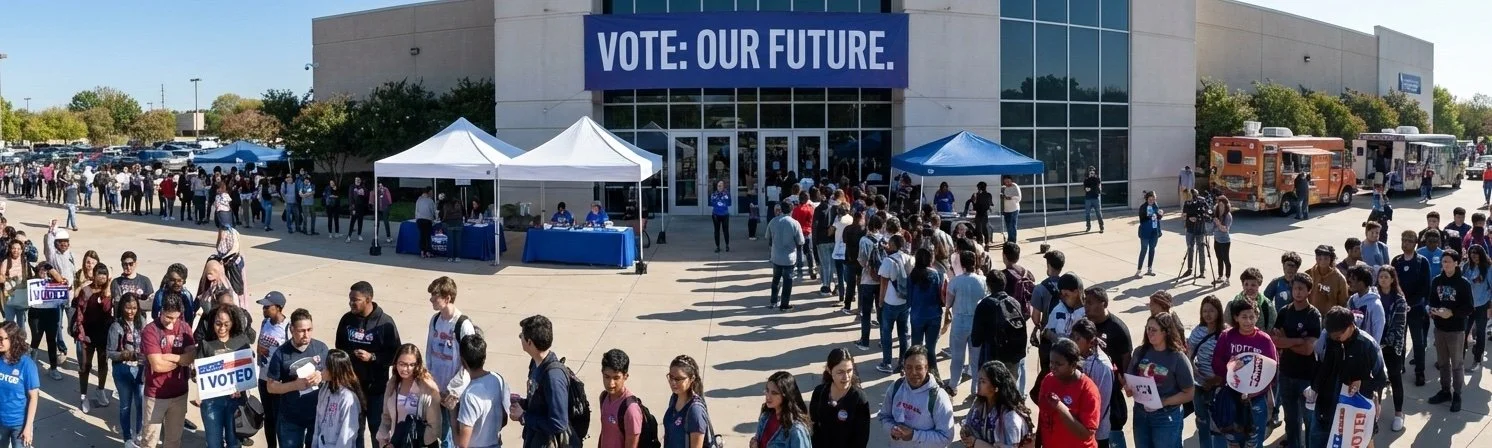
How Generational Change May Impact Politics and Elections
“When youth rise with purpose, the world bends towards progress.”
— Aloo Denish Obiero
Overview
With our political system struggling to even keep the lights of government on, and facing a budget crisis on virtually an annual basis, time is running out to find at least a plausible path forward out of this mess. Despite the fact that such economic concerns—not to mention other national problems—will disproportionately affect younger people because they will have to live longer with the consequences, counting on youth to vote in large numbers has historically not been a good bet. (Young voters are generally considered those aged 18 to 29.)
There have been exceptions, such as in the 2020 Presidential Election, when half of eligible young voters cast a ballot, one of the highest such rates for that group. The youth vote in the 2024 Presidential Election was more nuanced. It was slightly lower, at 47%, and also more divided, with a substantial gender gap in who they favored for President.
Why Younger Voters May Play a Greater Role in Future Elections
Rather than looking at the youth vote solely in terms of turnout and preferences, it’s probably more instructive to examine how younger voters feel about the political system in general, and political parties in particular. As it turns out, young people are considerably less likely to align with a political party than older voters. This is part of a broader movement away from political parties altogether, at this Gallup analysis indicates.
Much of the disdain of young voters reflects their disappointment with both major political parties. In general, they dislike the polarization, but even more, they reject the continued failures of both parties to address chronic national problems, such as affordability and climate change, as this article discusses. And who can blame then, after witnessing how vicious partisanship has proven wholly unproductive in solving the country’s ills?
Many younger voters also prefer to evaluate candidates and issues individually, rather than supporting the choice of a political party—a party they may agree with on some issues, but not on others. On a broader level, they are more concerned about their own future, and that of the nation. This focus may inspire some younger people to play a greater role in public decision-making. Whether or not they choose to do so as a group may have a significant influence on our country’s future direction.
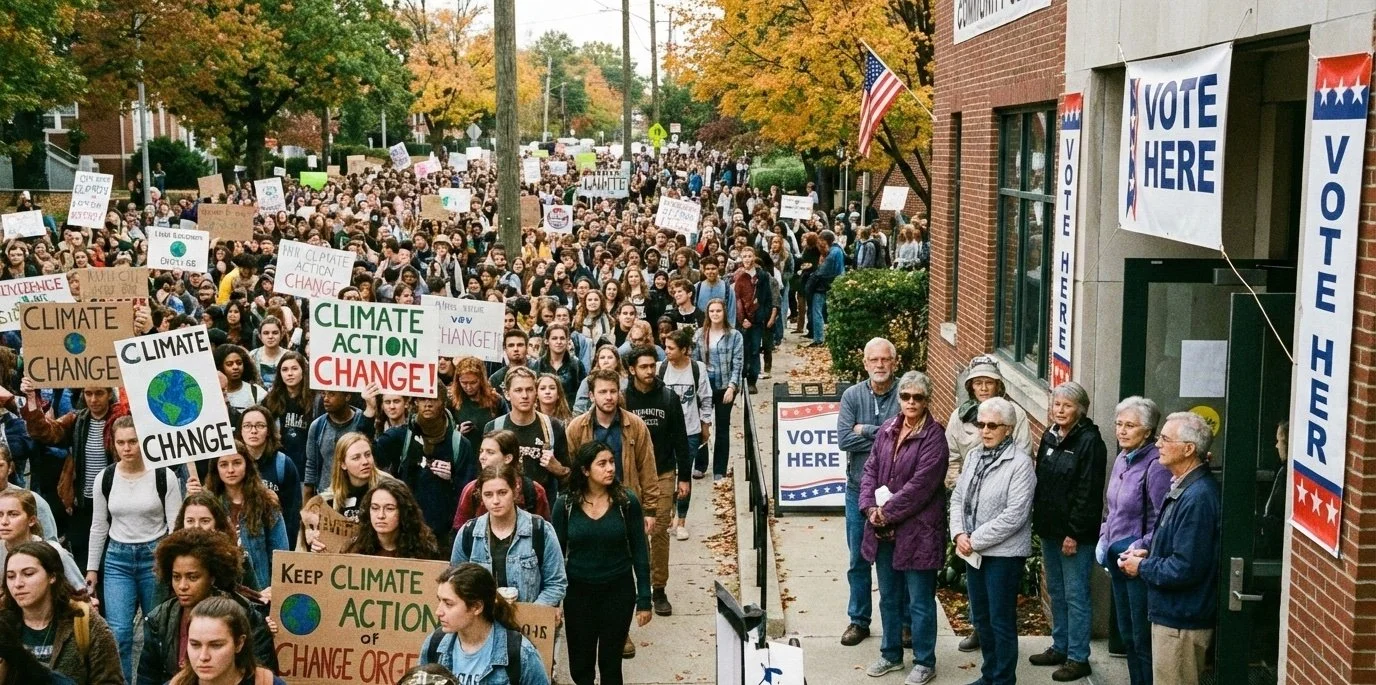
The Potential Effect Young Voters May Have
If the recent increase in the electoral participation of younger people carries over into them choosing to run for public office, it could have an influence not just on the voters’ choice of candidates, but on the types of candidates we see. According to the Gallup poll referenced in the previous section, the registration for each of the two major political parties has dropped to 27% apiece, while the percentage of voters identifying as independents has risen to a record high of 45%.
Despite this, only two of the 535 seats in Congress are held by independents. As we discuss in Is It Time for a Declaration of Independents?, the reasons for this mismatch are complex, but the status quo need not hold. Particularly if more candidates choose to run without affiliating with a political party, and if at least some are successful in winning elective office, the dam may break.
For a long time, voting for independent candidates has been viewed as a waste of a vote, simply because such candidates rarely won. In close contests, they were often blamed by the losing candidate for siphoning off their votes, thereby throwing the election to their opponent. But with independents now comprising almost 50% of voters, and half again as many voters as each of the two major parties, the math for unaffiliated candidates is beginning to look more viable.
The essential element missing now is a roster of credible candidates running as independents. Part of this can be attributed to their historically poor record in elections, which is a turnoff to both voters and potential independent candidates. But if younger independent voters turn their sites to running for office without affiliating with a political party, all of this could change.
Summing It Up
As younger generations make up an increasingly larger portion of the electorate, their tendency to not affiliate with a party would appear to set the table for more favorable outcomes for independent candidates. Of course, conditions and outcomes do not always closely correlate. Personally, I believe the opportunities for younger, independent candidates will depend on just a small number of them enjoying electoral success, which could in turn convince more such candidates to give it a try, as well as inspire more independent voters to cast their ballot for them.
Here’s one thing that, while not breaking news, is nonetheless important in evaluating the potential for future independent candidates. A supermajority of Americans are disgusted with our country’s politics. This Pew Center poll tells you everything you need to know about the breadth of their feelings. To me, the standout number is the 65% of people who said they always or often feel exhausted by the nation’s politics. Their struggle just to get by is tough enough, especially when they see their representatives living the high life courtesy of their special-interest benefactors.
After several decades of polling and teaching, I’ve never seen such a broad level of well-deserved disenchantment. Does that foretell a massive wave of incumbent lawmakers being thrown out of office? Probably not, due largely to how most people vote strictly along party lines. But if even just a handful a lawmakers are elected after taking a vow of independence, both from parties and from special-interest contributors, all bets are off for future elections.
It’s really up to us—and chief among us, younger voters.
Did You Know…?
Citizens become eligible to vote in the U.S. when they turn 18. When did this law take effect?
A) In 1788, with ratification of the U.S. Constitution
B) In 1850, when Congress lowered the voting age from 21 to 18
C) In 1925, when all States agreed to make the voting age consistent at 18
D) In 1971, with ratification of the Twenty-Sixth Amendment
You can find the correct answer at the bottom of this page.
Answer to the Did You Know…? Question
The answer is D) In 1971, with ratification of the Twenty-Sixth Amendment .
The U.S. Constitution originally made no mention of a minimum voting age, but left it to the States to decide who among their citizens could vote. In most States, an eligible voter had to be a white male landowning Protestant over the age of 21. By 1830, most property and religious restrictions had been abolished.
Ratified in 1870, the Fifteenth Amendment provided Black men the right to vote.
Ratified in 1920, the Nineteenth Amendment provided women the right to vote.
And finally, in 1971, ratification of the Twenty-Sixth Amendment lowered the Federal voting age from 21 to 18.