
Has America Forgotten How to Compete?
“In theory, there is no difference between practice and theory. In practice, there is.”
— Unknown
The Increase in the Lack of Competition
In addition to the loss of life and other tragic human costs, the inflationary impacts of the COVID-19 pandemic revealed just how much the U.S. economy has become uncompetitive. Supply-chains proved particularly fragile, and such disruptions have long been a driver of inflation according to this Federal Reserve report. There is also now greater recognition that the country’s tax policies bear at least some of the blame for exporting many of our manufacturing jobs.
The virtually unchecked approvals of countless corporate mega-mergers, combined with government giveaways to special interests and lax enforcement of antitrust laws, have left Americans hostage to markets dominated by monopolies, duopolies, and other massive companies. Generations of lawmakers have made the wildest dreams of special interests come true, creating laws to provide both corporate welfare and an unbalanced tax code that’s great for the politically well connected, but that burdens average citizens just trying to get by.
These days, lawmakers often boast about bills they propose to promote the common good, knowing full well that they have no chance of becoming law. In today's political climate, just introducing a bill is good enough. Actually enacting laws to produce favorable outcomes for everyday people isn’t required, as one party can simply blame the other for the failures of such bills.
As a result of the lawmakers’ focus on benefiting the wants and needs of special interests, the American economy has been left with a bevy of broken markets and little meaningful competition.
The Great Medicare Prescription Giveaway to Special Interests
A great example of the hold special interests have on lawmakers may be in your medicine cabinet. According to this survey from the Centers for Disease Control and Prevention (CDC), many Americans can't afford much needed but often prohibitively expensive prescription drugs. Pharmaceutical companies use their overwhelming market power to maintain predatory pricing practices, especially whenever there’s even a suggestion of increasing competition in this key sector of the economy.
When Congress passed the Medicare Prescription Drug, Improvement, and Modernization Act in 2003, it included a giveaway for the ages by prohibiting Medicare, the largest purchaser of prescription drugs in the country, from negotiating prices with manufacturers. To demonstrate how catastrophic this is for patients, the Veterans Administration (VA), despite serving far fewer people than Medicate does, pays significantly lower prices for the same drugs because they are permitted to negotiate those prices.
Don't be misled by the recent passage of a bill that allows Medicare to negotiate prices on a handful of drugs. While a welcome first step, Big Pharma did a great job of lobbying Congress to limit the expansion of negotiable medications over many years. And industry groups are fighting even this modest measure in court, arguing that drug-price negotiations infringe upon the constitutional rights of pharmaceutical companies. I know the Constitution pretty well, and don't recall seeing the right for corporations to rip off the public.
Think that rip off sounds harsh? Americans pay far more for the same prescription drugs than people in other countries, even though U.S. firms developed many of these drugs. Pharmaceutical companies argue this sky’s-the-limit, noncompetitive approach is essential to their profitability, which in turn allows them to conduct cutting-edge research in order to make new lifesaving drugs.
Even if you buy into this fallacious greed-is-good argument, it fails to address price gouging for older drugs that millions of Americans use. An excellent example is the skyrocketing cost of insulin, a hormone used to treat diabetes, the artificial development of which occurred more than a century ago. After howls of protest from millions of Americans, Congress finally placed a $35 cap on the cost of insulin for those on Medicare. Younger diabetics may save money on programs from individual pharmaceutical companies, but such reductions aren’t mandatory.
Our pay-to-play political culture really does have life-and-death consequences. All too many Americans are forced into heartbreaking choices, such as paying the rent or purchasing the prescription drugs they need, or reducing the amount or frequency of the medications they take just so that they can buy groceries.
Broader Trends of Noncompetitition
The efforts of the pharmaceutical industry to limit competition are hardly unique in a political system where influence peddling has become an industry. K Street in Washington, D.C., just blocks from the Capitol, has become known for being inhabited by lobbyists. Business there is booming.
The lack of meaningful competition costs Americans plenty. It often appears in subtle ways, such as when customers are forced to forgo their legal rights with a business should a dispute arise, and instead accept binding arbitration. Such procedures strongly favor businesses. And if you think you haven’t agreed to that, you might want to read the fine print when you click the Agree button on a device or website.
Without competition, of course, business are free to raise their prices astronomically. This can be especially burdensome for people just scraping by, living paycheck to paycheck, or worse. Higher costs for necessities leave little left over for anything else, including saving for the future or retirement.
We’re even seeing a lack of competition in our beloved professional sports. When a former National Football League (NFL) coach sued the league and several teams for racial discrimination, he further alleged that his former team's owner, in order to gain a better position for the team in the Amateur Draft, offered him a $100,000 per game bonus to lose.
It has long been apparent that there is little competitive balance in Major League Baseball (MLB). Teams no longer need to compete well on the field in order for them to be profitable. All teams are guaranteed big money from lucrative broadcast deals, licensing rights, and other shared revenues.
Amazingly, sports leagues are now earning money from a new type of advertising partner: gambling businesses. For those of us who have worked in MLB, this is particularly ironic. More than a century ago, in 1919, the so-called Black Sox gambling scandal nearly destroyed the sport. One consequence has been the posting of a sign, in every professional baseball clubhouse, that details the prohibition against gambling, and the severe penalties for doing so. I guess it’s different now, as long as Major League Baseball and its clubs get their cut of the action. And in the ultimate combination of greed and stupidity, people can now bet on various aspects of a particular player’s performance in a game. What could possibly go wrong with that?
Official Rules of
Major League Baseball
Rule 21: MISCONDUCT
(continued)
(d) GAMBLING.
(1) Any player, umpire, or Club or League official or employee, who shall bet any sum whatsoever upon any baseball game in connection with which the bettor has no duty to perform, shall be declared ineligible for one year.
(2) Any player, umpire, or Club or League official or employee, who shall bet any sum whatsoever upon any baseball game in connection with which the bettor has a duty to perform, shall be declared permanently ineligible.
Noncompetitive Politics
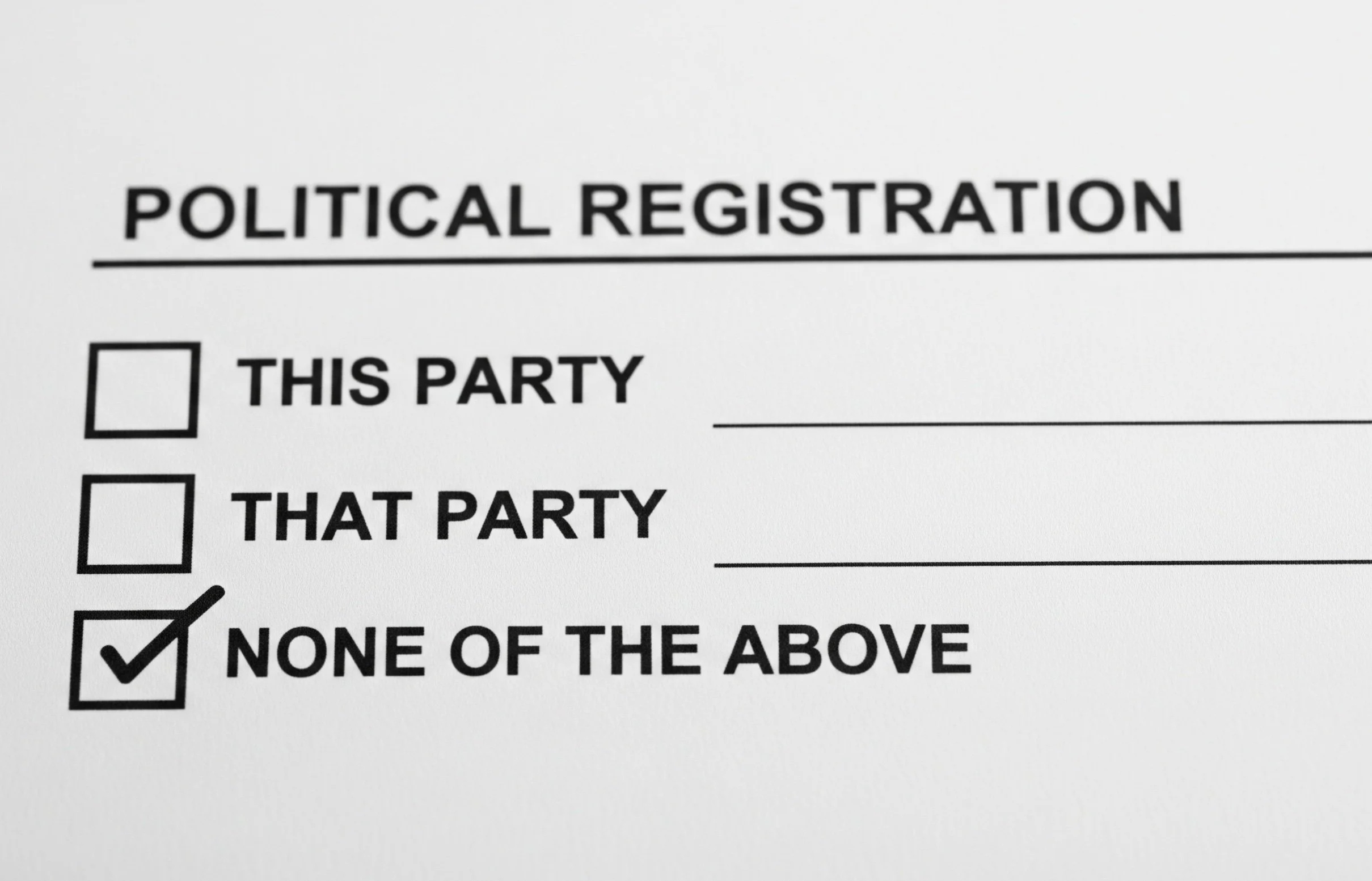
There is a connection between the lack of competition in economics and politics. How can just two major political parties adequately represent the interests of over 340 million people? The set of a person’s beliefs—social, economic, political, moral—rarely fits well into just one partisan bucket or the other. No wonder so many Americans, particularly younger people, are choosing these days not to affiliate with a political party.
Most Congressional races are won by very large margins. Between gerrymandered districts and most people voting along party lines, incumbent lawmakers usually have a pretty easy path to reelection. And when politicians don’t have to worry about what voters think, it’s time to hide your valuables and protect your rights.
The great news is that candidates no longer need to kowtow to special interests for campaign contributions, since funding campaigns through many small donations has proven to be a viable alternative. But this development will only matter if more candidates utilize this new model, and if voters factor into their decision-making process what industries and groups are funding the candidates on the ballot. In Revealing Open Secrets, GWR shows you where you can go to quickly find this information online.
Summing It Up
Competition breeds innovation. When it's stifled to give advantage to a select few, the rest of us suffer. Competitive markets are essential to give small and midsize businesses a level playing field, and to reward entrepreneurship, while not burdening many Americans with unnecessary and unjust inflation on products they need to survive.
We need a new generation of lawmakers more committed to fairness and shared responsibility. Here’s a list of large, profitable companies that paid no corporate income taxes in 2020. Where’s the fairness in that?
For those who don’t follow politics closely, it is sometimes difficult to connect the dots between the actions or inaction of lawmakers with pain at the checkout counter or in an online cart. Putting more time and thought into who and what we vote for, as well as increasing other types of citizen participation in our democracy, are essential to making lawmakers pay more attention to their constituents. As the makeup of the electorate transitions to newer generations, politicians will need to adjust their priorities to better meet their needs.
But why wait for our children and grandchildren to make our country a better place to live? It's really everybody’s choice.

Did You Know…?
What is the reelection rate for Members of Congress (1964-2024)?
A) Over 80%
B) Over 60%
C) Over 20%
D) Over 10%
You can find the correct answer at the bottom of this page.
Answer to the Did You Know…? Question
The answer is A) Over 80%.
As the first sentence in this OpenSecrets article characterizes it, “Few things in life are more predictable than the chances of an incumbent member of the U.S. House of Representatives winning reelection.” As the bar chart in the article demonstrates, in many years, their reelection rate is over 90%. That seems pretty amazing considering that the approval rating of the job Congress is doing has rarely crossed 30%, and is often considerably lower, according to these Gallup Polls dating back to 2002.