Action Will Be in the States
“There comes a time when one must take a position that is neither safe, nor politic, nor popular,
but he must take it because conscience tells him it is right.”
―Martin Luther King Jr.
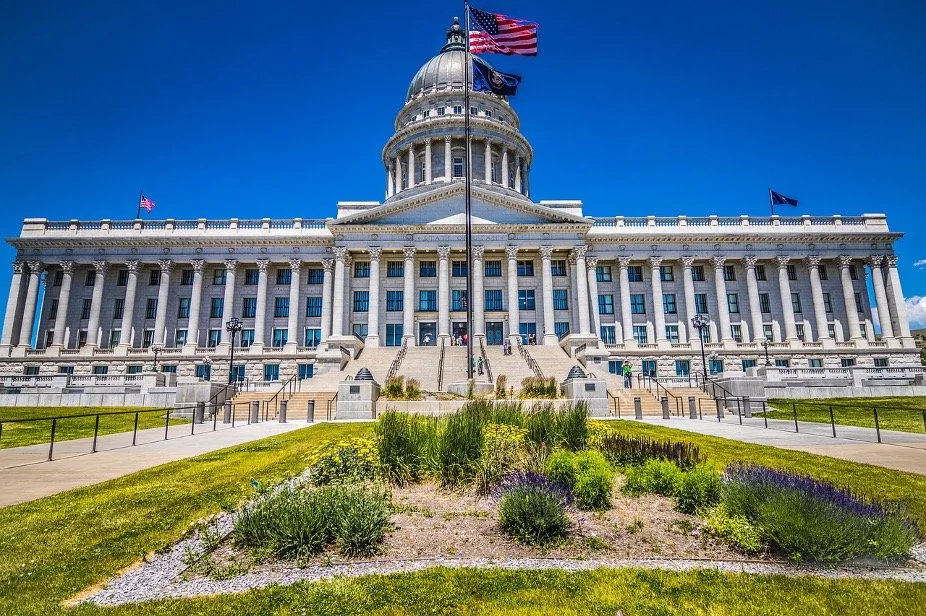
Utah State Capital Building
Until newer generations of less partisan, more solution-driven lawmakers assume greater political power, the path to more functional and responsive government will run mostly through state capitols.
While generational change in politics is inevitable, getting meaningful things done in D.C. will remain difficult until arcane rules like the filibuster and senatorial courtesy that allow even a single Senator, to bring its actions to a halt, are changed.
In rejecting a monarchy, the framers wanted to avoid concentrations of power. Yet, current Senate rules do exactly that by giving small numbers of Members, effective veto power over key aspects of the legislative agenda and operations.
And until the federal government overall regains a semblance of functionality, the state you live in will increasingly matter in terms of the laws you live by and your personal freedoms.
Unfortunately, most know little about their state representatives, starting with who they are. According to this Johns Hopkins study, less than 20% can name their district's state legislators. About one on three could not identify their state’s governor.
The U.S. Constitution is Not Realistically Changeable at This Time, So It's Up to the States
Let's be clear; no matter how much our Constitution needs updating, there’s little chance of that happening in the foreseeable future. Getting the necessary two-thirds of the Congress and three-quarters of the states to amend it seems highly unlikely regardless of how popular a particular amendment may be.
However, state Constitutions are more routinely amended. Besides amendments passed by their state legislatures, some states also allow voters to amend them through the initiative process.
In states with direct democracy, voters have other options for passing new laws, rejecting laws passed by lawmakers or recalling elected office holders.
With the federal government effectively gridlocked legislatively, the impetus to update constitutions in some states will likely gain steam in the years ahead.
It’s a Great Time to Run for a State Office
Since few know who their state legislators are, it enhances opportunities for new candidates, especially those willing to make a serious effort to introduce themselves to voters.
Candidates can now do so in newer, creative ways. Thirty-second ads are great for TV stations’ bottom lines but their effectiveness among voters is debatable since the media market is now more splintered and many tune them out altogether.
Those on the ballot can now reach voters via online platforms that allow longer form introductory videos. Such ads can be more persuasive, while less costly than TV spots, and finely targeted to specific groups.
Low tech works too and walking the walk can be very helpful. Get yourself some comfortable shoes and start meeting your potential constituents. Since few candidates do that these days, those willing to make the effort really stand out.
In this era of widespread dissatisfaction and disgust with the political status quo, now’s a great time for fresh faces to run for office. Here’s a good article with tips for running for local offices for first time candidates. Get out there, rookie!
Summing It Up
The allure of working in the political big leagues of Washington may sound better than toiling in the relative obscurity of a state capitol or local government office.
However, if you’re interested in getting things accomplished and sooner than later, working on our state and local political playing fields are likely to be more productive and satisfying than roaming the halls of a impotent Congress.
The do-nothing label Harry Truman hung on his Congress, remains just as relevant today. The 118th Congress (2023 – 2024), was one the least productive in our nation’s history according to this article.
Even that characterization gives them too much credit. Given the relatively small number of days they’re in session and lackluster productivity, the only running many Members do is between campaign fundraisers.
If you want political change, do your part by getting more involved. And for now, working at the state or even local levels is likely to be where the action is.