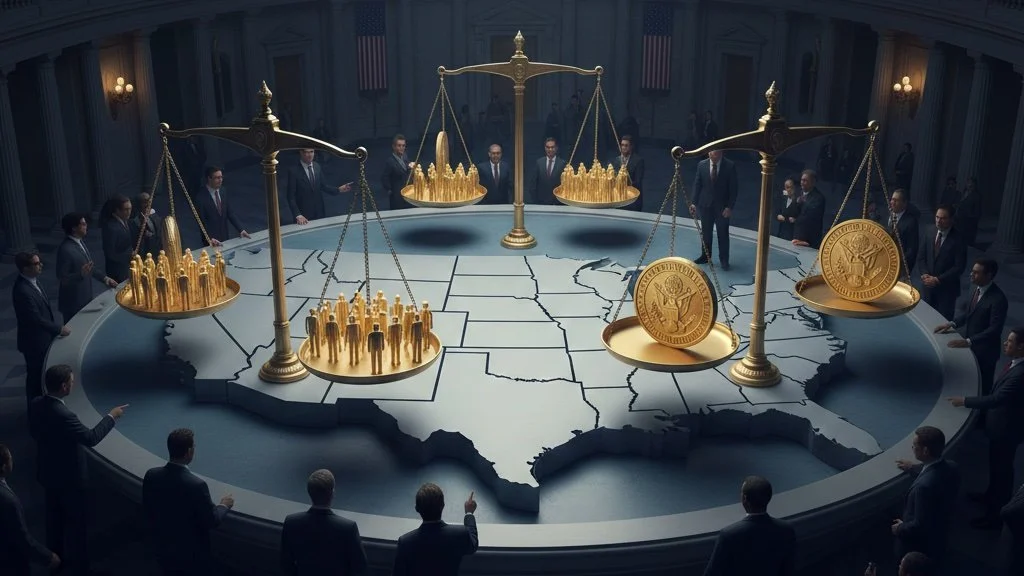
The Electoral College
“The current system violates the one-person, one-vote rule. It’s essential to representative government to get it changed.”
— Kay Maxwell
What is the Electoral College?
The Electoral College is not an institution, nor is it a place. Defined in Article II, Section 1 of the U.S. Constitution, it is actually a set of individuals and a process by which the President and Vice-President are elected to their respective offices. Although specifications are made about Electors in the Constitution, the term Electoral College is not mentioned. The term first came into use in the English language in 1677, more than a century before the Constitution was ratified, but it only began to be regularly used to describe the American system in the 1800s.
Essentially, when citizens vote for the President and Vice-President, they are voting for Electors—people who then vote for the candidates. Prior to the ratification of the Twelfth Amendment in 1804, Electors cast two ballots, making no distinction between the office of President and Vice-President. Whoever received the most electoral votes became President, and whoever received the second most became Vice-President.
Historically, this led to unexpected consequences in two of the country’s first four national elections. In 1796, John Adams, of the Federalist Party, received the most votes from the Electors and was elected President, while Thomas Jefferson, of the Democratic-Republican Party, received the second-most votes and was therefore elected Vice-President. Thus, the two highest Federal offices were held by political rivals.
In 1800, Thomas Jefferson and Aaron Burr, campaigning as running mates, ended up with an equal number of Electors. This then threw the election to the House of Representatives, who eventually—after 35 ballots on which neither candidate received the necessary majority—elected Thomas Jefferson as President.
The Twelfth Amendment required that Electors cast separate votes for President and Vice-President.
So How Does It Work?
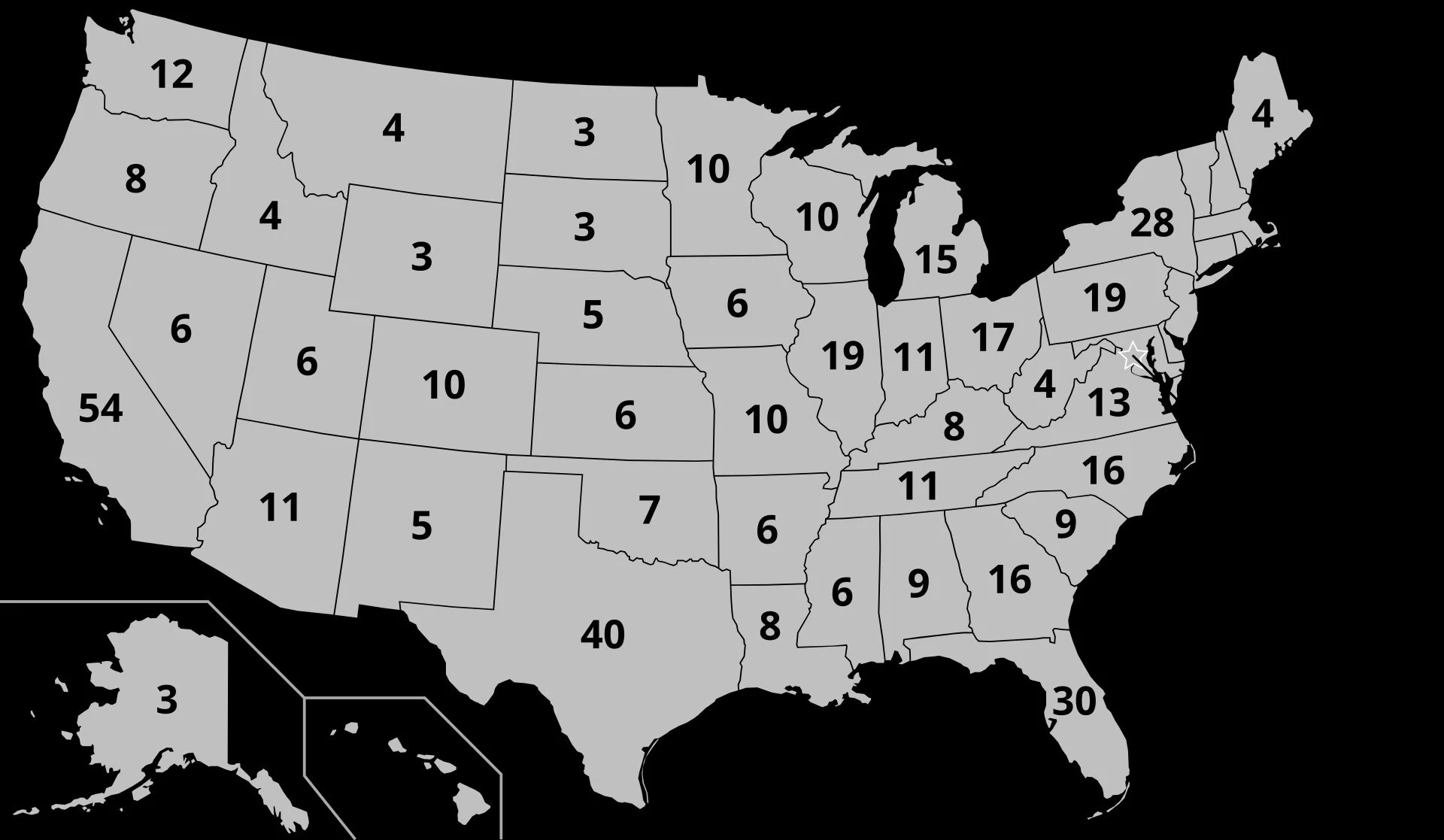
The Founding Fathers wanted to ensure that citizens living in States with smaller populations would not be marginalized by those in more populous ones. To that end, the people in each State vote for Electors, and each State has the same number of Electors as it does Members of Congress. This actually gives additional weight to less populous States because, even though the number of Representatives is based on population, every State gets two Senators, regardless of how many people live there.
Let’s look at an example using real-world 2026 numbers. Ohio has a population of about 12 million, while Idaho has approximately two million people. Based on population, Ohio has 15 Representatives, and Idaho has two, but both States have two Senators. That means that Ohio gets 17 Electors (15 Representatives plus two Senators), and Idaho has four (two Representatives plus two Senators). So even though Ohio has six times as many residents as Idaho, it receives only slightly more than four times as many Electors.
In addition, the Founders believed at the time that many of the country’s residents were not educated enough to make such important decisions as who should serve as President and Vice-President. This was before community colleges and relatively inexpensive state universities became commonplace. The Founders therefore designed the Electoral College for the purpose, at least in part, of preventing a demagogue—a leader appealing to passion and prejudice, rather than to reason—from becoming President. They also intended for Electors to be both wise and independent, allowing them to filter the popular vote and ensure the election of a qualified statesman to the highest office in the land.
One Person Does Not Equal One Vote
Using our example above, Ohio’s 12 million citizens get 17 Electors, which means a single Electoral Vote cast represents 705,883 people. Idaho and its two million residents have four Electors, meaning a single Electoral Vote there represents only 500,000 people. Another way to look at it is that every 705,883 people in Ohio get one Electoral Vote, while the same number of people in Idaho get 1.4 Electoral Votes. The consequence of the Electoral College is therefore that the Electoral Votes of citizens in smaller States are essentially worth more than those of residents in larger ones.
A direct result of this system is that a candidate can win election without receiving the most votes. As of 2026, in the 60 Presidential elections so far held in this country, this has happened five times—including two of the last seven. In one out of every 12 elections, the person who received the most votes did not win the Presidency. If you believe in true Democracy, where one person gets one vote, then that fact feels wrong.
Did You Know…?
When did citizens first vote for Senators?
A) In 1788, during the country’s first national election
B) In 1804, after Electors were required to cast separate ballots for President and Vice-President
C) In 1868, after the Civil War
D) In 1913, just before World War I
You can find the correct answer at the bottom of this page.
We Can’t Get Rid of It—But We Can Make It Less Important
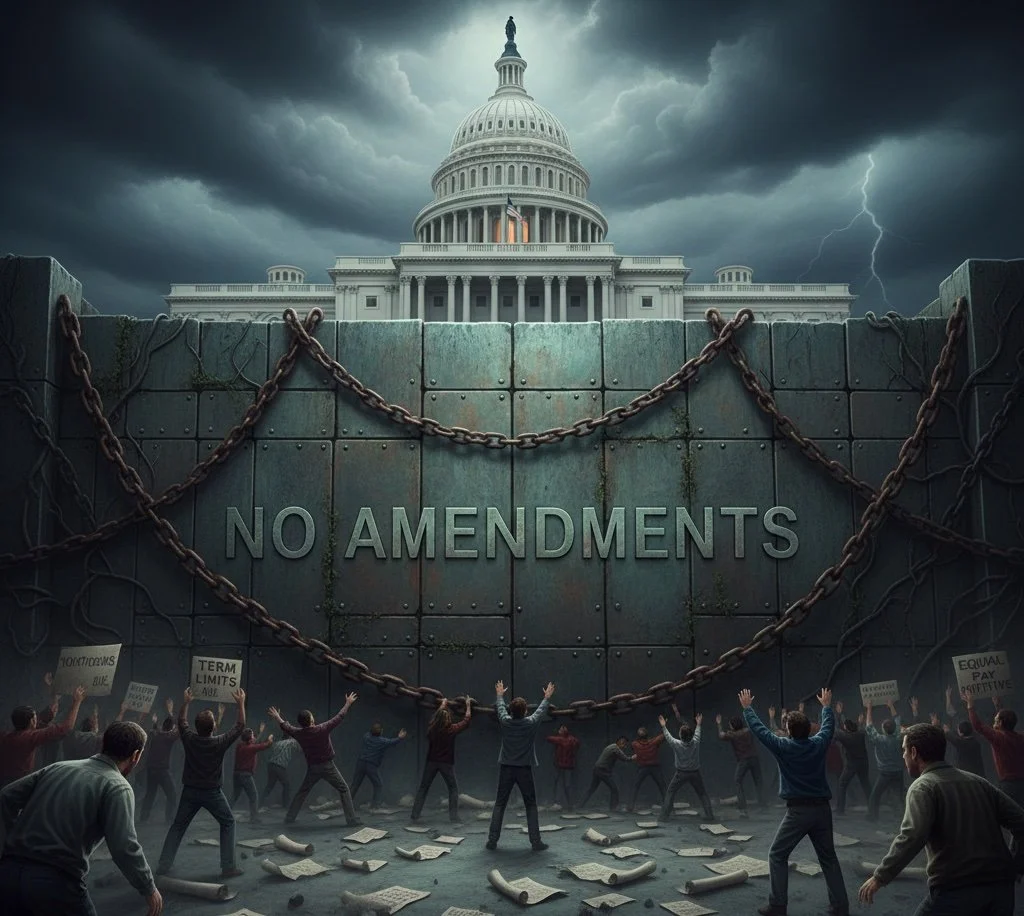
Although it may seem like a good idea to eliminate the Electoral College in favor of implementing a system where one person gets one vote, there’s really no viable way of doing so. Because our current means of electing a President and Vice-President is laid out in the Constitution, it would require an Amendment to modify it. But there is a high bar for passage of a Constitutional Amendment: approval by two-thirds of both Chambers of Congress, and then ratification by three-quarters of the State legislatures. Considering the great political divisions in this country right now, all of that seems at best difficult, if not impossible.
An alternative that has been explored would be to create an agreement among a sufficient number of States to allocate their Electoral Votes not to the winner of the popular vote in their State, but to the winner of the national popular vote. Doing so would ensure that the candidate with the most votes becomes President. Unfortunately, there would be no real way to enforce such an agreement, and along with the Supreme Court’s potential unwillingness to approve such an arrangement, that renders the idea impractical.
A different option would be to have more States dump the winner-take-all method of allocating Electoral votes. As of 2026, only Nebraska and Maine do not cast all of their Electors for the Presidential candidate who receives the most votes in their State. Instead, those two States allocate their Electoral votes by the winners in each of their Congressional Districts. For this approach to have a significant impact, though, many other States would have to adopt this method, or something similar.
So are we forever stuck with the Electoral College, even though it treats large numbers of voters unequally, allowing a Presidential candidate to achieve victory simply by winning a few key swing States by narrow margins? The short answer is yes, since attempting to deal with the problem on a legislative level would require lawmakers to act without regard to partisanship or political self-interest—something few of them rarely do. At the same time, there are ways to work around the shortcomings of our current system.
Working Around the Shortcomings of the Electoral College
Differences between the outcomes of the national popular vote and the Electoral College usually occur in close elections. While precisely defining how large a margin of victory would be necessary to avoid such results, a reasonable estimate of at least five percent would likely do the trick. That is to say, if a Presidential candidate receives at least five percent more votes across the country than his opponents, then that candidate is very likely to win the Electoral College as well, and thus the election.
According to this table, of the 51 Presidential elections held since 1824, 60% (31 out of 51) of them were decided by margins greater than five percent. With margins of victory at least that large, not once have the popular vote and electoral outcomes differed. In that table, you’ll also find a considerable number of cases (19 out of 51, or 37%) where the elections were decided by margins of 10% or more. There’s also quite a bit of clumping of this data, where the country goes through a period of close elections, and not-so-close ones. This suggests at least the possibility of moving away from the tight Presidential contests we’ve experienced in the past quarter-century.
Taking all of this into consideration, we can see a hint at how to minimize the possibility of different outcomes between the national popular vote and the Electoral College. We simply need to achieve a greater consensus across the country about our preferred choice for President. One major way to do this would be for voters to stop casting their ballots based on party, but rather on the individual candidates.
The Importance of How We Choose
Some of the factors that make it difficult to reach a broader national consensus on our choice for President include how we obtain information about the candidates, and how in recent times, the overall news environment has changed and fractured. People across the country used to have more common and more widely trusted sources for obtaining factual information. News anchors such as Walter Cronkite had enormous audiences, and they were trusted by most Americans. Many believe that Cronkite’s growing skepticism about the veracity of what government officials were telling the American people about the Vietnam War helped foster public disillusionment about it, eventually hastening withdrawal from that conflict.
Today’s news landscape is more splintered, due largely to the proliferation of information sources available online. This has led to a growing trend of people viewing only those sources whose viewpoints match their own. As a result, we’ve lost the ability to proceed from a commonly accepted set of facts, which impacts our capacity to build our knowledge of public affairs and our ballot choices.
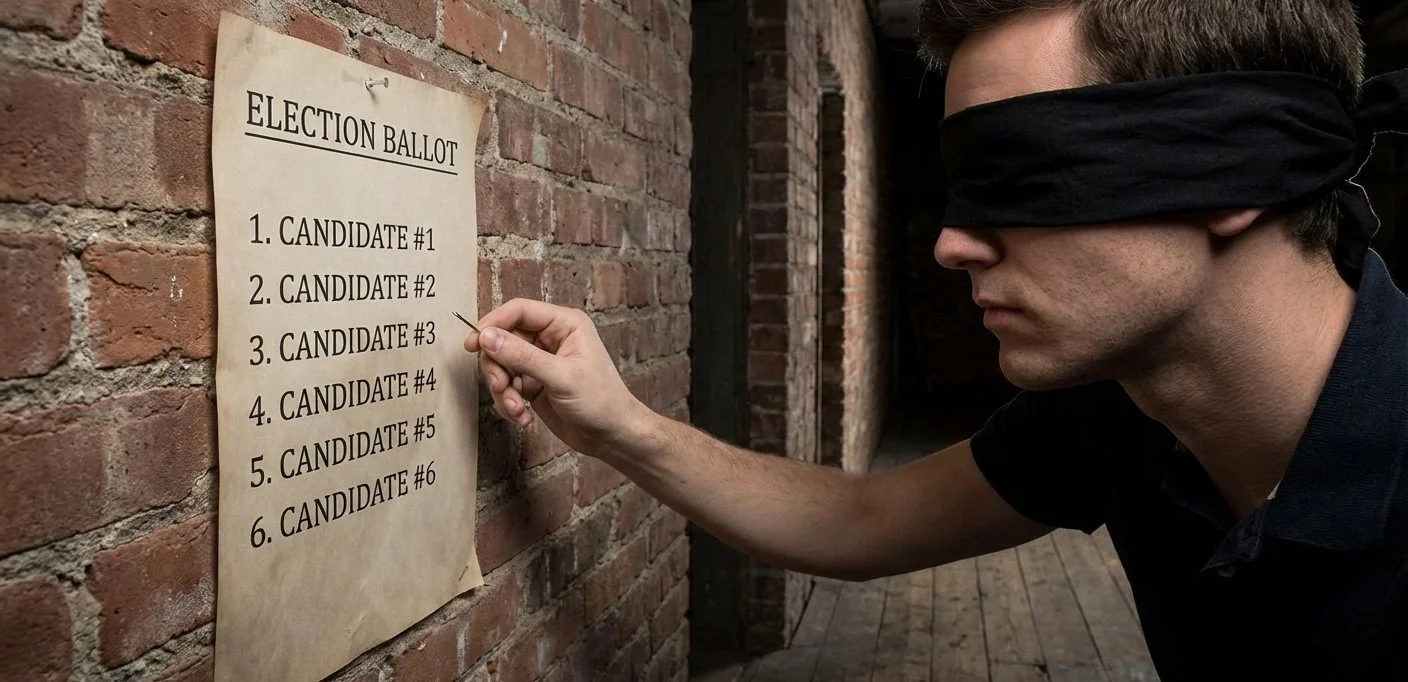
As a college teacher, I make extensive efforts to help bridge these divides. For example, I require students to follow the news by reading or watching at least one news story each week. As a high-value, semester-long assignment, they must compile a lot of these stories. To help expose them to a variety of views, they are permitted to employ the same news source no more than twice. I also encourage them to use some sources with which they knowingly disagree, in order for them to gain a broader perspective.
For many of my students, this is their first attempt to actively follow current events through the news media. Although some aren’t initially wild about the assignment, many later indicate that they were glad to get into the habit. In fact, I once placed an order in the drive-through line of a fast-food restaurant, and when I reached the window, I encountered a former student who volunteered this gratifying comment: “Hey, Professor, loved your class and I’m still following the news. You want ketchup with your fries?” Mission accomplished! (And of course I wanted ketchup.)
Summing It Up
Two big reasons for the dysfunctional state of our politics and government are hyper-partisanship and the effective ownership of many lawmakers by special interests due to candidates’ reliance on them for campaign contributions. We also must acknowledge that many Americans remain disengaged from public affairs, often based on their justifiable disgust with the actions, inaction, and dubious behavior of officeholders. But this makes it easier for lawmakers to largely ignore public opinion.
If we are to elect a good President and more effective lawmakers, we need to seek out and reward candidates who appeal to more than just one side of the political spectrum. Successfully doing so should lessen the likelihood of future Presidential elections going one way in the popular vote and another in the Electoral College.
Like many of our political problems, the solutions to them rest as much with voters as with lawmakers. Educate yourself about candidates, and keep an open mind when you vote. We also need for voters to get more involved in public decision-making in other ways, which is something we’ll cover extensively in other posts on GeorgeWasRight.
Our parents were right: we can make a difference!
Answer to the Did You Know…? Question
D) In 1913, just before World War I.
In the same way that the Founders did not entrust the people with direct election of the President and Vice-President, they provided for State legislatures to select U.S. Senators. That practice remained in place for 125 years, until passage of the Seventeenth Amendment, which allowed for the direct election of Senators by voters.